Disclosure: This post contains affiliate links. If you click through and make a purchase, we may earn a small commission at no extra cost to you. Thank you for supporting this site!
Think you need to spend thousands on a professional dog trainer to get reliable obedience? I certainly did, until I adopted my first rescue, a stubborn but brilliant Australian Shepherd mix named Finn. After a frustrating first week where “sit” was met with a tilted head and zero action, I committed to a 30-day, do-it-yourself training challenge. The result? A dog that could reliably perform five essential commands in any environment, from a quiet living room to a chaotic dog park. The secret wasn’t magic; it was a structured, consistent plan tailored to his breed’s specific intelligence and energy levels. Whether you have a bouncy Labrador Retriever requiring 60 minutes of daily exercise or a more sedentary Bulldog content with 30, this guide provides the minute-by-minute, day-by-day blueprint to master the five foundational commands: Sit, Stay, Come, Down, and Leave It. We’ll use scientifically-backed positive reinforcement techniques, break down the exact number of daily repetitions needed, and even factor in the cost of essential tools, from a simple $5 pouch of training treats to a $40 6-foot leather leash.
10 min read
In This Article
- The 30-Day Training Blueprint: A Day-by-Day Approach
- Command #1: Sit – The Foundation of Control
- Command #2: Stay – Building Duration and Distance
- Command #3: Come – The Lifesaving Recall
- Command #4: Down – Promoting Calm Behavior
- Command #5: Leave It – Essential Impulse Control
- Tools of the Trade: What You Actually Need
- Troubleshooting Common Setbacks
- Conclusion: Your Path to a Well-Trained Companion
- Frequently Asked Questions
Key Takeaways
- The 30-Day Training Blueprint: A Day-by-Day Approach
- Command #1: Sit – The Foundation of Control
- Command #2: Stay – Building Duration and Distance
- Command #3: Come – The Lifesaving Recall
The 30-Day Training Blueprint: A Day-by-Day Approach
Consistency is the non-negotiable foundation of any successful training program. A haphazard approach of training for 20 minutes one day and skipping the next will only confuse your dog and slow progress. This 30-day plan is designed to build skills incrementally, layering complexity as your dog gains confidence. Each week focuses on introducing and solidifying one or two commands before combining them. For high-energy herding breeds like Border Collies or Australian Shepherds, I found integrating 5-minute training sessions into their existing exercise routine (like after a fetch break) maximized their focus. For less energetic breeds like Basset Hounds, shorter, more frequent 2-3 minute sessions scattered throughout the day worked better to maintain engagement without causing burnout.
The daily time commitment is manageable but requires dedication. Plan for two formal 10-15 minute training sessions per day, ideally before mealtimes when your dog is most motivated by food. The rest of the work happens in “captured” moments—asking for a “sit” before opening the door for a walk or a “down” while you’re preparing dinner. I tracked Finn’s progress in a simple notebook, noting days he struggled with “stay” (often when he was overly excited) so I could adjust the difficulty. The total cost for this program, excluding optional items, can be as low as $25 if you use kibble as treats and a basic leash, but budgeting around $75 gives you higher-value training treats and a durable, comfortable harness.
I tracked Finn’s progress in a simple notebook, noting days he struggled with “stay” (often when he was overly excited) so I could adjust the difficulty.
Command #1: Sit – The Foundation of Control
“Sit” is typically the easiest command to teach and serves as a cornerstone for impulse control. The goal is to have your dog offer a sit automatically in various situations, like when greeting guests or at street corners. The most effective method is lure-reward training. Hold a small, high-value treat (like Zuke’s Mini Naturals, which are soft and about the size of a pea, costing around $12 for a 16-oz bag) right at your dog’s nose, then slowly move your hand up and back over their head. As their head follows the treat, their rear end will naturally lower to the ground. The moment their bottom touches the floor, say “Yes!” in a bright, clear voice and immediately give them the treat.
Practice this in 5-minute sessions, aiming for 10-15 successful repetitions per session. Within the first three days, most dogs make the connection. The key is timing the marker word (“Yes!”) and the reward to occur within 1.5 seconds of the desired action. I made the mistake early on of fumbling with the treat pouch, which delayed the reward and confused Finn. After a few days, begin to phase out the lure by using an empty hand in the same motion, but still rewarding from your other hand. By day 7, your dog should respond to the verbal cue “sit” and/or a hand signal alone. For stubborn breeds like Siberian Huskies, patience is critical; they may require more sessions over 10 days to master this reliably.
Command #2: Stay – Building Duration and Distance
Once “sit” is solid, you can layer on “stay.” This command teaches your dog to remain in a specific position until released, a vital skill for safety. Start with your dog in a sit. Hold your palm out towards them like a stop sign and say “Stay.” Wait just one second, then say your release word (“Okay!” is common) and reward them. The release is as important as the stay itself; it tells the dog the exercise is over. If they break the stay before the release, simply say “Oops,” have them resume the sit position, and try again with a shorter duration.
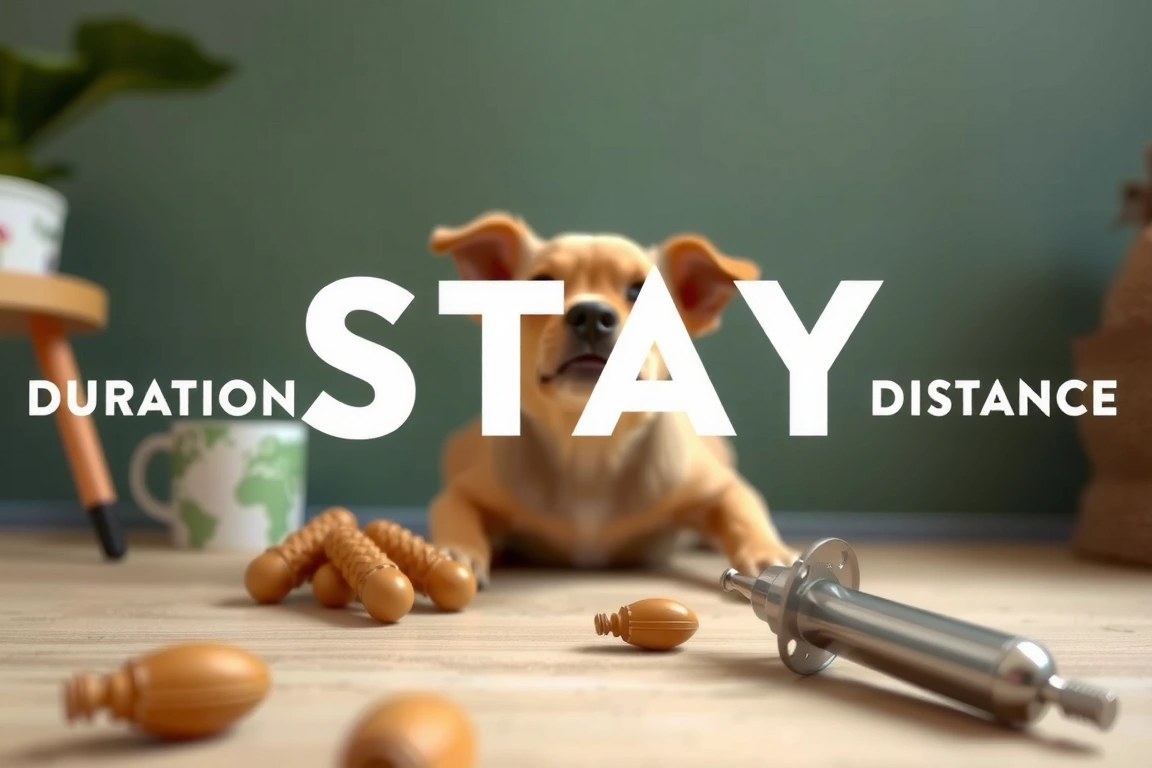
The progression follows three rules: Duration, Distance, and Distraction. First, build duration by slowly increasing the time from 1 second to 10 seconds, then 30 seconds. Only increase the time when your dog is successful 8 out of 10 times at the current level. Next, add distance. Take one step back, return, and reward. Gradually increase to stepping across the room. Finally, introduce mild distractions, like tapping your foot or having another person walk quietly by. I learned the hard way not to move too fast; trying to add distance before Finn had a solid 15-second stay resulted in him constantly breaking to follow me. A tool that can help is a 6-foot training leash from a brand like Mendota Pet (around $20), which gives you a physical connection to gently guide them back if they break the stay prematurely.
I learned the hard way not to move too fast; trying to add distance before Finn had a solid 15-second stay resulted in him constantly breaking to follow me.
Command #3: Come – The Lifesaving Recall
A reliable recall is arguably the most important command for your dog’s safety. The goal is to make coming to you the most exciting thing your dog can do, every single time. Never use the recall for something your dog perceives as negative, like ending playtime or giving a bath. Instead, pair the command with an ultra-high-value reward that they only get for this specific behavior. For Finn, this was tiny pieces of freeze-dried liver (like Stewart Freeze-Dried Dog Treats, approx. $15 for a 4-oz bag).
Start indoors with minimal distractions. With your dog just a few feet away, get their attention and say “Come!” in an enthusiastic, happy voice. As they move towards you, encourage them. When they reach you, reward lavishly with the special treat and praise. Gradually increase the distance within your home. Once it’s solid indoors, practice in a securely fenced area. The biggest mistake owners make is calling their dog when they aren’t confident the dog will comply, which teaches the dog that “come” is optional. If your dog doesn’t come, do not chase them; instead, go to them or encourage them another way. For sighthounds like Greyhounds, whose instinct is to run, a long-line leash (a 15-30 foot leash) is essential for safe practice in open spaces.
Command #4: Down – Promoting Calm Behavior
The “down” command promotes a calm, settled state and is useful in many scenarios, from waiting at the vet’s office to relaxing at a outdoor café. To teach it, start with your dog in a sit. Hold a treat in your closed fist near their nose, then slowly lure it straight down to the ground between their front paws. Most dogs will follow it down into a lying position. If your dog stands up instead, you moved the lure too far forward. The moment their elbows touch the ground, say “Yes!” and reward.

Some dogs, particularly large breeds or those with a stubborn streak, can be resistant to “down.” If luring doesn’t work, you can try a capturing method. Simply wait for your dog to lie down on their own throughout the day. The second they do, say “Yes!” and toss them a treat. They will quickly associate the action with the reward. Another option is a shaping technique, where you reward small approximations, like a head dip or a single bent elbow. Finn was initially resistant, so I used a comfortable mat (like the Frisco Solid Dog Bed, $35 for a large) as a specific “place” for down, which helped him understand the context. Practice “down” in different locations to ensure the command generalizes beyond your living room rug.
Practice “down” in different locations to ensure the command generalizes beyond your living room rug.
Command #5: Leave It – Essential Impulse Control
“Leave it” instructs your dog to ignore something tempting, whether it’s a chicken bone on the sidewalk or a child’s dropped toy. This command can prevent poisoning, choking, and other dangerous situations. Start with a low-value item, like a piece of their own kibble, in your closed fist. Present your closed fist to your dog. They will likely sniff, lick, or paw at it. Ignore this. The moment they back away or stop investigating, even for a split second, say “Yes!” and reward them with a different, higher-value treat from your other hand. They learn that ignoring the temptation yields a better reward.
Once they reliably ignore the treat in your closed fist, progress to placing a treat on the floor and covering it with your hand. Use the same process: reward them for not trying to get it. Gradually, you can cover the treat with just your fingers, then leave it uncovered but be ready to cover it if they lunge. The final step is to use the command while walking on a leash, practicing with items on the ground at a distance. I practiced “leave it” with Finn using a Kong Wobbler toy ($18) filled with treats; he had to learn to leave it alone until I gave the release cue. This command requires immense self-control from your dog, so keep sessions very short—under 3 minutes—to avoid frustration.
Tools of the Trade: What You Actually Need
You don’t need a garage full of equipment, but a few key items will make the process smoother and more effective. The single most important tool is a high-value reward. This isn’t your dog’s regular kibble. Look for soft, smelly, pea-sized treats that your dog goes crazy for. I recommend having a tiered system: standard-value treats (like Zuke’s Mini Naturals) for easy commands, and ultra-high-value treats (like real meat or freeze-dried liver) for difficult commands like “come.” A treat pouch, like the Wolfwill Treat Pouch ($15), keeps rewards accessible and your hands free.

A standard 6-foot leash is essential. Avoid retractable leashes for training, as they teach constant pressure on the collar and offer poor control. A well-fitting harness, such as the Ruffwear Front Range Harness ($40-$60), is excellent for dogs prone to pulling, as it discourages strain on the neck. For recall training, a 15-foot or 30-foot long-line leash (like the OneTigris Long Training Lead, $20) is a safe way to practice in open areas. Clickers can be useful for precise marking of behavior, but a consistent verbal marker like “Yes!” works just as well. The total startup cost for a quality setup is typically between $60 and $100.
Troubleshooting Common Setbacks
It’s normal to hit plateaus or encounter problems. If your dog isn’t responding to a command, the most common issue is a lack of motivation. The treat you’re using might not be valuable enough, or your dog might simply not be hungry. Try training before meals. Another frequent mistake is progressing too quickly. If your dog fails a new step more than a few times, go back to the previous step where they were successful and practice there for another day or two.
If your dog seems distracted, the training environment might be too stimulating. Move to a quieter room without other pets or people. For stubborn breeds like Shar-Peis or Akitas, patience and keeping sessions incredibly short and positive are key; forcing the issue will lead to a shutdown. If you’re dealing with fear or anxiety, consult a certified professional dog trainer or a veterinary behaviorist. Remember, every dog learns at their own pace. Finn took nearly the full 30 days to master a solid “stay” with distractions, but he learned “leave it” in under a week. The 30-day timeline is a guide, not a strict rule.
Conclusion: Your Path to a Well-Trained Companion
Training your dog is an investment that pays dividends for years in the form of safety, convenience, and a stronger bond. The 30-day framework provides the structure, but your consistency is the engine. Start tomorrow by purchasing your high-value treats and scheduling two 10-minute sessions into your day. Focus purely on “sit” for the first week, mastering it before adding “stay.” Remember to always end on a positive note, even if it means asking for a simple command your dog already knows perfectly. The goal isn’t perfection in a month, but a solid, reliable foundation that you can continue to build upon. A well-trained dog is not just a polite pet; they are a safer, happier, and more integrated member of your family.
Small changes, real momentum
Get practical guides and templates you’ll actually use — a few thoughtful emails a month.
Frequently Asked Questions
What if my dog is older? Is it too late to train them?
It is absolutely not too late. While puppies are sponges for new information, adult and senior dogs can learn new commands effectively. The principles are the same, but you may need to adjust for physical limitations. For an older dog with arthritis, for example, asking for a “down” on a soft surface is kinder. The training might take a bit longer as you work around established habits, but the brain’s ability to learn remains. I’ve successfully trained senior rescue dogs using this exact method, often with even greater success because they have a longer attention span than a hyperactive puppy.
My dog knows these commands at home but ignores me at the park. Why?
This is a classic problem called a lack of generalization. Dogs are context-specific learners. Just because they perform perfectly in your quiet living room doesn’t mean they understand the command applies everywhere. The solution is to proof the commands systematically. Practice in slightly more distracting environments first, like your backyard, then a quiet corner of a park, gradually working up to the busiest areas. Always use higher-value rewards in high-distraction environments to successfully compete for your dog’s attention.
Should I punish my dog if they don’t listen?
No. Punishment-based training is widely discouraged by modern behavioral science because it can damage the trust between you and your dog, increase anxiety, and suppress behaviors without teaching the dog what you actually want them to do. If your dog isn’t listening, it’s usually because the command isn’t proofed enough, the distraction is too high, or the motivation is too low. The solution is to go back a step in training to a point of success, not to administer a correction. Positive reinforcement builds a willing and happy working partner.
🐾 Our Top Pick
Editor’s Pick: An interactive dog feeder for smarter, focused training sessions.
For the Love of Your Pet
Care guides, breed insights, and gentle advice for happier pets.