
Disclosure: This post contains affiliate links. If you click through and make a purchase, we may earn a small commission at no extra cost to you. Thank you for supporting this site!
Here’s a number that surprises most new owners: nearly 1 in 4 Labrador Retrievers will develop some degree of hip or elbow dysplasia before age five, according to OFA (Orthopedic Foundation for Animals) statistics on the breed. I found this out the hard way with my second Lab, Maple, who started limping after too many stair sessions as a 12-week-old puppy — a mistake that cost me $340 in orthopedic X-rays and a hard lesson about growth plates. Labs are the most registered breed with the AKC for 31 consecutive years running, which means there’s no shortage of bad advice floating around about how to raise one. What actually matters in the first 12 months has almost nothing to do with fetch and everything to do with feeding math, joint protection, and a socialization window that closes faster than most people realize. This guide walks through the seven steps that determine whether your Lab puppy turns into a 65-pound couch potato with hip problems or a genuinely healthy, well-adjusted dog for the next 10 to 12 years.
10 min read
In This Article
- Step 1: Verify Health Testing Before You Even Bring the Puppy Home
- Step 2: Build a Feeding Schedule Based on Growth Rate, Not Guesswork
- Step 3: Front-Load Socialization in the 3-to-14-Week Window
- Step 4: Respect the “5-Minute Rule” for Exercise
- Step 5: Set Up Crate Training and a Housetraining Routine on Day One
- Step 6: Build Your First-Year Vet and Vaccine Calendar
- Step 7: Start Training Early, Using the Breed’s Own Strengths
- Cost of Ownership: The First-Year Breakdown
- Key Takeaways
Key Takeaways
- Step 1: Verify Health Testing Before You Even Bring the Puppy Home
- Step 2: Build a Feeding Schedule Based on Growth Rate, Not Guesswork
- Step 3: Front-Load Socialization in the 3-to-14-Week Window
- Step 4: Respect the “5-Minute Rule” for Exercise
Step 1: Verify Health Testing Before You Even Bring the Puppy Home
A Labrador Retriever’s lifespan typically runs 10 to 12 years, according to the AKC breed standard, but that range shrinks fast when hereditary conditions go unscreened. Reputable breeders test parent dogs through OFA or PennHIP for hip and elbow dysplasia, and through the Optigen or Embark panel for exercise-induced collapse (EIC) and progressive retinal atrophy (PRA). If a breeder can’t produce these certificates, that’s your answer — walk away, regardless of how good the puppy photos look on Facebook Marketplace.
When I picked up Maple in 2021, her breeder handed me a folder with OFA hip scores of “Good” for both parents and a clear EIC panel. That paperwork cost the breeder roughly $250 per parent dog in testing fees, which is exactly why health-tested Lab puppies run $1,200 to $2,500 versus $400 to $800 from backyard breeders or online listings with no documentation. The math is simple: pay more upfront or risk paying $3,000+ in orthopedic surgery later, since a single TPLO knee surgery for a Lab-sized dog averages $3,500 to $6,000 according to veterinary cost surveys from Trupanion and Nationwide Pet Insurance.
EIC deserves special mention because it’s Labrador-specific and almost nobody outside working-dog circles knows about it. It causes muscle weakness and collapse after 5-15 minutes of intense exercise in otherwise healthy-looking Labs, and it’s a genetic mutation carried by an estimated 3-5% of the breed population per research out of the University of Minnesota’s Veterinary Genetics Laboratory. Ask for this test specifically — it’s not automatically included in every basic health panel.
Ask for this test specifically — it’s not automatically included in every basic health panel.
Step 2: Build a Feeding Schedule Based on Growth Rate, Not Guesswork
Labrador puppies gain weight faster than almost any other retriever breed, often reaching 40-50 pounds by six months. That rapid growth is exactly why overfeeding is the single most common mistake I see — and one I made myself with my first Lab, Duke, who hit 30 pounds by 12 weeks because I was following the “eyeball it” method instead of the bag’s actual feeding chart. Faster growth doesn’t mean healthier growth; it means more stress on joints that haven’t finished forming.
Large-breed puppy formulas exist specifically to slow calcium absorption and control growth rate. Royal Canin Labrador Retriever Puppy (a breed-specific formula, roughly $65 for a 30-lb bag as of 2025 pricing) and Purina Pro Plan Large Breed Puppy ($55-60 for a 34-lb bag) are the two I’ve used across three Labs, and both cap calcium at around 1.2-1.5% dry matter, which matters more than protein percentage at this stage. Feed three meals a day until 4 months, then transition to two meals — Purina’s own feeding guide recommends roughly 2.5 to 4.5 cups daily split across those meals for a puppy tracking toward 65-80 lbs adult weight.
- 8-12 weeks: 1.5-2 cups/day, split into 3-4 meals
- 3-6 months: 2.5-3.5 cups/day, split into 3 meals
- 6-12 months: 3-4.5 cups/day, split into 2 meals
Weigh your puppy weekly on a scale like the Redmon Digital Baby Scale (about $30) rather than trusting visual judgment. If weight gain exceeds roughly 3-5% per week after the first two months, cut portions by 10% and check with your vet before it becomes a joint problem instead of a diet adjustment.
Step 3: Front-Load Socialization in the 3-to-14-Week Window
Veterinary behaviorists, including the American Veterinary Society of Animal Behavior, point to weeks 3 through 14 as the critical socialization period where puppies form lasting associations with people, sounds, and environments. Miss this window and you’re not doomed, but you’re working uphill for the rest of the dog’s life. Labs are generally rated high on friendliness (the AKC lists them as one of the most sociable breeds), but that temperament is a starting point, not a guarantee — a Lab isolated during this window can still develop noise phobias or stranger anxiety.

Aim for exposure to at least 7-10 new environments and 100 new people by 14 weeks, a benchmark drawn from Dr. Ian Dunbar’s puppy socialization guidelines, which many trainers and shelters still reference today. That means car rides, vet clinic visits that aren’t just for shots, hardware store trips (many Home Depot and Lowe’s locations allow leashed dogs), and controlled meetups with vaccinated, calm adult dogs — not a chaotic dog park free-for-all.
Puppy kindergarten classes, typically $120-200 for a 6-week course at chains like PetSmart or local training centers, are worth the money specifically for the structured exposure, not just the “sit” and “stay” commands. I enrolled Maple in a class through a local trainer for $150 and the biggest payoff wasn’t obedience — it was watching her calmly ignore a rolling shopping cart at 16 weeks old, something Duke never fully got comfortable with because I skipped formal classes with him.
Ian Dunbar’s puppy socialization guidelines, which many trainers and shelters still reference today.
Step 4: Respect the “5-Minute Rule” for Exercise
This is the step most new owners get catastrophically wrong, and it’s the one that put Maple in for X-rays. Labrador Retriever growth plates in the long bones don’t fully close until 12-18 months, and repetitive high-impact activity before that — think jumping off furniture, running on pavement, or long hikes — increases the risk of angular limb deformities and early-onset arthritis.
The commonly cited guideline among veterinary orthopedic specialists is the “5-minute rule”: five minutes of structured exercise per month of age, up to twice a day. So a 3-month-old puppy gets roughly 15 minutes of structured walking per session, not an hour at the dog park. This isn’t about total energy — Labs have plenty of it — it’s about limiting concussive stress on joints that are still cartilage in places.
- 2-4 months: 10-20 minutes, 2x daily, leash walks only
- 4-6 months: 20-30 minutes, 2x daily, avoid stairs/jumping
- 6-12 months: 30-45 minutes, 2x daily, light fetch okay on grass
- 12+ months: 60-90 minutes daily, full exercise cleared
Free play in a securely fenced yard is fine and actually preferable to structured walks at this age, since puppies self-regulate impact better than owners think. What you want to avoid is forced repetitive motion — the kind that comes from jogging alongside a bike or running the same fetch pattern 40 times in a row.
Step 5: Set Up Crate Training and a Housetraining Routine on Day One
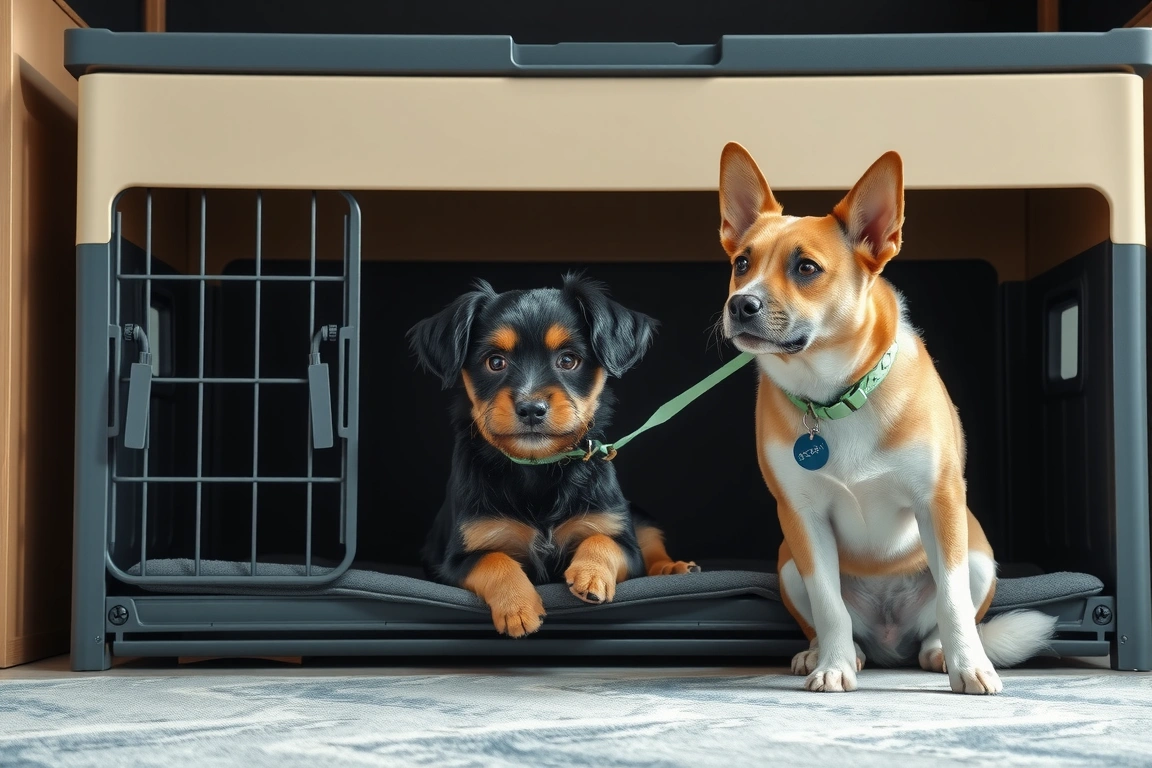
A properly sized crate does double duty as a housetraining tool and a den-instinct outlet. For a Lab puppy that will reach 65-80 lbs (males) or 55-70 lbs (females) as an adult, I recommend sizing up gradually rather than buying one giant crate immediately — a 24-inch crate like the MidWest iCrate 24″ ($55-70) works for 8-16 weeks, then move to the 36-inch or 42-inch iCrate ($90-130) once the puppy is 25+ lbs, using the included divider panel to prevent using one end as a bathroom.
Housetraining a Lab typically takes 4-6 months of consistent effort, though some owners report full reliability closer to 6 months given the breed’s food-driven, sometimes distractible nature as puppies. The schedule that worked for both Duke and Maple: out every 2 hours during the day for the first month, immediately after every meal and nap, and one middle-of-the-night bathroom break until around 12 weeks.
Track accidents in a simple log for the first two weeks — most housetraining failures come from owners missing patterns, not from the dog being “stubborn.” If you’re seeing more than 1-2 accidents per week by month three, tighten the schedule rather than assuming the dog needs more time; Labs are generally quick learners on this specific skill when the routine is consistent.
Step 6: Build Your First-Year Vet and Vaccine Calendar
Puppies need a DHPP (distemper, hepatitis, parainfluenza, parvovirus) series at roughly 8, 11, and 14 weeks, plus a rabies vaccine around 12-16 weeks depending on state law, following AVMA and AAHA guidelines. Budget $75-120 per visit at a standard vet clinic, or look into low-cost clinics through organizations like the ASPCA or local humane societies, which sometimes run vaccine clinics for $20-40 per shot.
Spaying or neutering timing has shifted in recent veterinary guidance. Older advice said 6 months flat; current large-breed research, including a widely cited 2020 UC Davis study on Golden Retrievers and Labs, suggests waiting until 12-24 months may reduce joint disorder risk in large breeds by allowing growth plates to close first. Talk to your vet about this specifically — it’s a real trade-off between orthopedic health and reproductive risk, not a settled question.
First-year vet costs for a Lab typically total $700-1,200 including vaccines, a fecal exam, heartworm/flea prevention (around $15-25/month for products like Heartgard Plus and NexGard), and the spay/neuter procedure itself, which runs $200-500 depending on your region and the dog’s sex. Pet insurance through providers like Healthy Paws or Trupanion runs roughly $35-55/month for a Lab puppy and is worth pricing out before symptoms show up, since Labs carry above-average lifetime risk for hip dysplasia, elbow dysplasia, and obesity-related joint stress.
Step 7: Start Training Early, Using the Breed’s Own Strengths
Labs typically score high on trainability — most breed temperament scales, including the AKC’s own descriptions, rate them 4-5 out of 5 for trainability and eagerness to please, largely because they were bred as retrievers working closely with handlers. That said, “trainable” doesn’t mean “automatically obedient.” Their food motivation, which makes treat-based training effective, is the same trait that causes obesity if training sessions aren’t balanced against total daily calories.

Start with basic cues — sit, stay, come, leave it — at 8-10 weeks using short 5-10 minute sessions, 2-3 times daily. Puppies this young have limited attention spans; anything past 10 minutes turns into frustration for both of you. A treat pouch like the PetSafe RuffLand ($15) and small, low-calorie training treats (Zuke’s Mini Naturals, around $6/bag) work better than full-size biscuits, since you’ll be doing 20-40 repetitions per session.
Mental stimulation matters as much as physical exercise for this breed. Puzzle feeders like the Outward Hound Nina Ottosson Dog Tornado ($20) or a frozen KONG Classic ($10-14 depending on size) burn energy without adding joint stress, which makes them genuinely useful during the low-impact exercise months covered in Step 4. A bored Lab puppy chews furniture; a mentally worked Lab puppy naps.
Cost of Ownership: The First-Year Breakdown
Here’s what raising a Lab puppy actually costs in year one, based on my own receipts across two dogs plus current 2025-2026 pricing on the products mentioned above:
- Puppy purchase (health-tested breeder): $1,200-2,500
- Food (Royal Canin or Purina Pro Plan, 12 months): $600-750
- Vet care, vaccines, spay/neuter: $700-1,200
- Crate, bed, bowls, leash/collar: $180-280
- Training classes: $120-200
- Toys and enrichment items: $80-120
- Pet insurance (12 months): $420-660
That puts realistic first-year spending somewhere between $3,300 and $5,700, not counting the emergency vet visit almost every Lab owner eventually has for eating something they shouldn’t have — Labs’ food drive makes them frequent visitors to the “swallowed a sock” category of pet insurance claims. Budget for it rather than being surprised by it.
Key Takeaways
Raising a healthy Labrador puppy comes down to three things you can control and act on this week: confirm the parents’ OFA/PennHIP and EIC test results before you commit to a breeder, follow the 5-minute-per-month exercise rule instead of letting a high-energy puppy set the pace, and switch to a large-breed puppy formula like Royal Canin Labrador Retriever Puppy or Purina Pro Plan Large Breed Puppy rather than a generic puppy food. Get the socialization exposure done before 14 weeks — it’s the one window that doesn’t reopen. If you’re deciding between a Lab and another retriever-type breed for your household, it’s worth running the numbers on exercise minutes and grooming time side by side before you commit, since a 65-80 lb dog with high food drive is a different daily commitment than people expect from the “friendly family dog” reputation alone.
How much exercise does a Labrador puppy actually need per day?
Under 12 months, follow the 5-minute rule: five minutes of structured exercise per month of age, twice daily, so a 6-month-old puppy gets about 30 minutes per session. Free play in a fenced yard doesn’t count against this limit since puppies self-regulate impact. After 12-18 months once growth plates close, adult Labs typically need 60-90 minutes of exercise daily to avoid weight gain and destructive boredom behavior.
What’s the realistic cost of owning a Labrador Retriever in the first year?
Expect $3,300-5,700 total for year one, covering a health-tested puppy ($1,200-2,500), food ($600-750), vet visits and spay/neuter ($700-1,200), gear, training classes, and pet insurance. This range assumes a reputable breeder and standard veterinary care — costs drop somewhat with adoption but you’ll want to budget similarly for vet catch-up care and gear regardless of acquisition source.
At what age should I switch my Labrador puppy from puppy food to adult food?
Most large-breed puppy formulas, including Royal Canin and Purina Pro Plan Large Breed Puppy, recommend transitioning around 12-15 months, once growth has largely leveled off. Switching earlier can shift calcium and calorie ratios before the skeleton has finished developing, so stick with the large-breed puppy formula through the first year even if your Lab looks “grown” by month 8 or 9.
Are Labrador Retrievers prone to specific health problems I should watch for?
Yes — hip and elbow dysplasia, obesity, exercise-induced collapse (EIC), and progressive retinal atrophy (PRA) are the four conditions most associated with the breed, according to OFA data and canine genetics research. Watch for limping after activity, reluctance to jump, or muscle weakness after 5-15 minutes of intense exercise, and raise any of these with your vet promptly rather than assuming it’s normal puppy clumsiness.
Small changes, real momentum
Get practical guides and templates you’ll actually use — a few thoughtful emails a month.
For the Love of Your Pet
Care guides, breed insights, and gentle advice for happier pets.