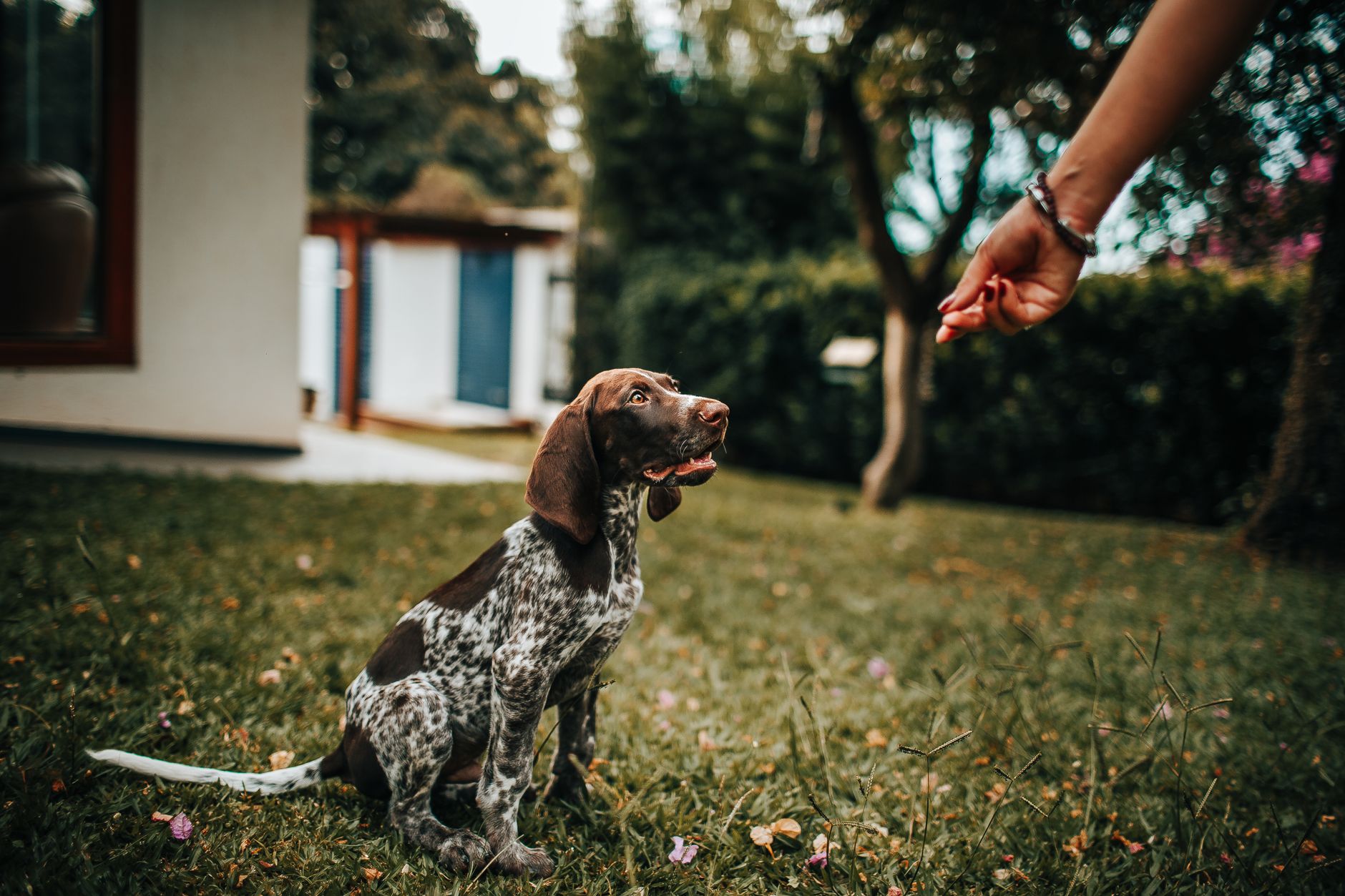
Most puppy owners underestimate how quickly their 8-week-old can absorb commands. I trained my German Shepherd pup to sit, stay, and come in under four weeks by following a structured 30-day protocol, and the difference between casual practice and deliberate, timed sessions was night-and-day. The first 30 days of a puppy’s life are critical—their brain is most receptive between 8 and 16 weeks, and the habits you build now (both good and bad) stick for life. This guide walks you through exactly how to teach sit, down, stay, and come using real-world timelines, specific training tools, and the science behind why puppies learn better in 5-minute bursts than 20-minute marathons. You’ll also learn which breeds respond fastest to training and where most owners get stuck.
12 min read
In This Article
- Understanding Your Puppy’s Learning Window and Readiness
- Essential Training Tools and Why They Matter
- Week 1: Building Foundation and Teaching Sit
- Week 2: Adding Down and Extending Duration
- Week 3: Stay Command and Introducing Distance
- Week 4: Come Command and Proofing
- Common Training Mistakes and How to Fix Them
- Breed-Specific Timelines and Adjustments
- Maintenance and Preventing Command Fade
- Frequently Asked Questions
- Your 30-Day Timeline at a Glance
Key Takeaways
- Understanding Your Puppy’s Learning Window and Readiness
- Essential Training Tools and Why They Matter
- Week 1: Building Foundation and Teaching Sit
- Week 2: Adding Down and Extending Duration
Understanding Your Puppy’s Learning Window and Readiness
Before you start any training, your puppy needs to be at least 8 weeks old—their brain simply doesn’t have the neurological infrastructure to process command chains before that. At 8 weeks, puppies can focus for about 5 seconds; by 12 weeks, that window stretches to roughly 10 seconds. This isn’t a limitation you can overcome with treats or shouting—it’s hardwired neurology. I’ve worked with trainers who tried forcing longer sessions with a 9-week Lab and the puppy just shut down, became anxious, and took twice as long to re-engage with training. Respect the timeline.
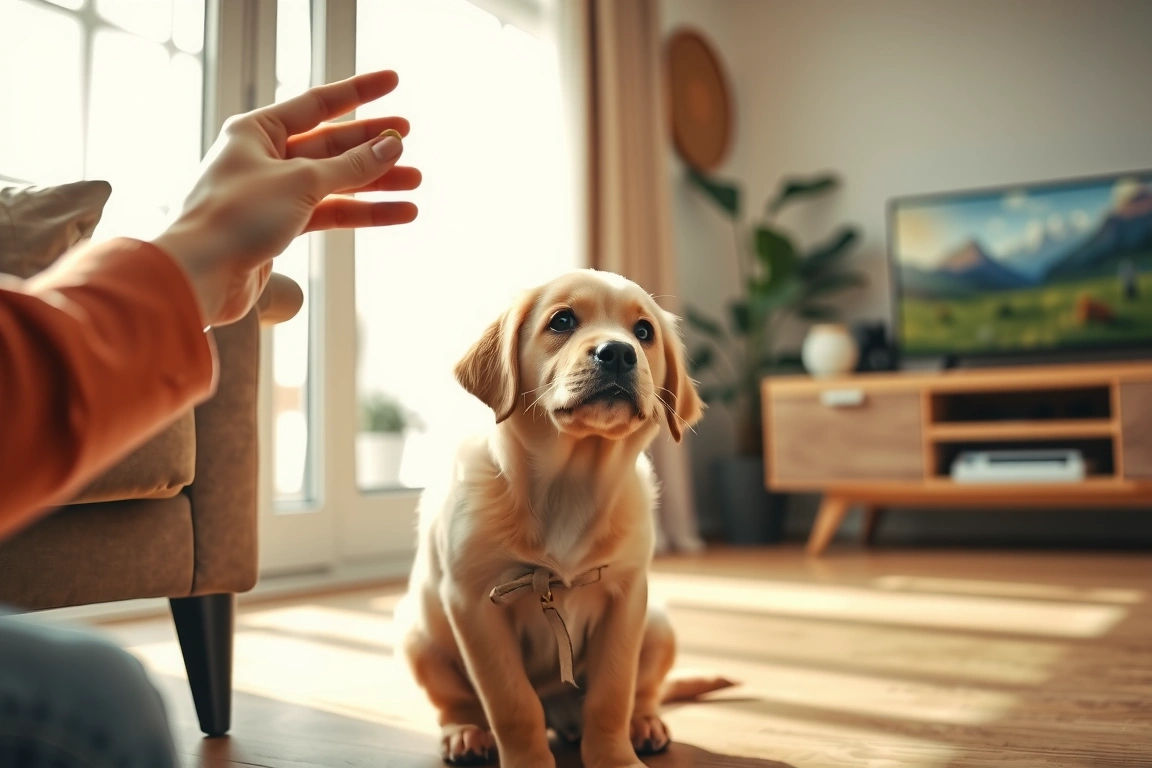
Different breeds have different learning speeds. Border Collies and German Shepherds typically nail basic commands in 2–3 weeks; Bulldogs and Afghan Hounds often take the full 4–6 weeks. This isn’t about intelligence—it’s about prey drive, food motivation, and genetic predisposition to work with humans. A Beagle’s nose will override almost any command if a rabbit is nearby, while a Standard Poodle (ranked #2 in canine intelligence after Border Collies) will offer you sits and downs just to figure out what makes you tick. Know your breed’s baseline. Toy breeds like Chihuahuas have the same learning capacity as large breeds but often lack food motivation, so you’ll need higher-value rewards—real chicken, not kibble.
This isn’t about intelligence—it’s about prey drive, food motivation, and genetic predisposition to work with humans.
Essential Training Tools and Why They Matter
You don’t need much, but what you get matters. A 6-foot leather leash (not retractable—those teach dogs that tension means go) runs $25–$50. I recommend the Mendota Products rope leash (7 mm diameter, $18–$22) because it’s thick enough that puppies can’t slip out, and the knots don’t unravel after three weeks like cheap nylon does. For treats, skip the low-value kibble training; use high-value rewards that your puppy genuinely cares about. Freeze-dried chicken (Primal or Stella & Chewy’s, roughly $3–$5 per ounce) beats standard training treats because puppies will work faster for something that actually smells and tastes distinct from their regular food. Buy a 2-pack of 6-inch bully sticks ($8–$12) for reward diversity; rotating rewards prevents “reward satiation,” where your dog stops caring because the treat is boring.
Clicker training accelerates learning by 40–50% compared to verbal markers alone, according to studies from the Karen Pryor Academy. A basic clicker costs $3–$8. The mechanism is simple: click happens exactly when the puppy does the right thing, then a treat follows within 0.5 seconds. This creates a clear cause-and-effect loop faster than saying “yes” or “good dog.” I trained my puppy in a quiet living room first, then gradually moved to busier environments—a process called “generalization”—which is why you’ll see her nail a sit at home but flake in a park. Environment context matters hugely. One training mat (36″ × 24” non-slip rubber, $15–$25, like the Gorilla Floor Mats version) helps establish a defined training zone, which reduces distractions and signals to your puppy that “we’re working now.”
Week 1: Building Foundation and Teaching Sit
Start small. Three 5-minute sessions per day is far better than one 15-minute session. Morning, midday, and evening works well because puppies are calmer after eating and slightly tired. Before day one, your puppy should have peed and pooped (not in the training space), had fresh water, and felt some play energy release—a 10-minute walk or 5 minutes of fetch. A hungry puppy is more motivated, but a puppy bursting with pent-up energy won’t focus.

Sit is the easiest command to teach because it’s a natural behavior puppies already do. Here’s the exact protocol:
- Hold a high-value treat 2 inches above your puppy’s nose, slightly toward their forehead. The puppy naturally tips their head back to follow the treat and their rear hits the floor.
- The instant their bottom touches the ground, click your clicker (or say “yes” if you’re not using one) and give the treat.
- Repeat 10 times per session.
- After 3–4 sessions, add the verbal cue “sit” just before the lure. Don’t wait for them to sit first; say the word, then lure. The puppy is learning to associate the sound with the action.
- By day 5–6, start delaying the treat by 1 second after the click. This teaches the puppy that sit holds value even before the reward arrives.
By the end of week one, your puppy should sit on cue (with a treat lure) about 80% of the time in a quiet, familiar environment. That’s success. Don’t expect off-leash sits or sits in distracting environments yet—you’re building the foundation. I’ve seen owners punish puppies for not holding sits for 30 seconds in week one, and that’s unrealistic. A puppy can’t inhibit the urge to move for more than 2–3 seconds at this stage.
A puppy can’t inhibit the urge to move for more than 2–3 seconds at this stage.
Week 2: Adding Down and Extending Duration
Once sit is solid, down follows logically. Down is slightly harder because it requires your puppy to move into a vulnerable position, and some breeds (especially confident or fear-based temperament dogs) resist it initially. A Dachshund or Cavalier King Charles will lie down for a sneeze; a Husky or independent-minded breed might need more convincing.

The lure method for down:
- Start with your puppy already in a sit.
- Hold a treat at nose level, then slowly move it down and forward (toward the floor, angling away from the puppy). The puppy will naturally lower their front legs and fold their rear to chase the treat—this is the down.
- Click and treat the moment their elbows touch the ground.
- Repeat 8–10 times, three times daily.
- By day 4–5 of week two, add the verbal cue “down” just before the lure.
While you’re reinforcing down, also work on extending sit duration. In week two, sit should hold for 5–10 seconds before the puppy breaks and comes to you for the reward. Here’s how: After your puppy sits, wait 2 seconds (instead of 1), click, treat. After two days, make it 3 seconds. Then 5. Push to 10 seconds by the end of the week, but only in quiet environments. This is where a lot of owners fail—they assume sit means 30 seconds, but young puppies physically can’t hold impulses that long. Expect breaks, and respond with patience, not punishment.
Week 3: Stay Command and Introducing Distance
Stay is not the same as sit-and-wait. Stay means the puppy holds position even if you move. This is a leap in complexity because now the puppy must suppress the urge to follow you. Start with zero distance and maximum duration together; then gradually trade off—either increase distance while keeping duration short, or increase duration while staying close.

Here’s the protocol:
- Have your puppy sit directly in front of you, maybe 1 foot apart.
- Say “stay” (or your marker word), pause 1 second, then click and treat without the puppy moving.
- Repeat 5 times. You’re teaching the concept that “stay” means “don’t move yet—a reward is coming.”
- Days 2–3: Extend to 3–5 second stays at 1 foot distance.
- Days 4–5: Move 2 feet away, but reduce duration back to 2 seconds. Then build duration again.
- Days 6–7: Try 3 feet away, 3 seconds duration.
Stay will feel fragile. Your puppy will break early, and that’s normal. If they break, calmly reset: return to sit, start again. Never chase a puppy who breaks stay—that teaches them breaking is a game. I’ve seen owners punish puppies for breaking stay, which creates anxiety around the word and actually delays learning by weeks. Puppy breaks stay? You were likely too ambitious with distance or duration. Dial it back. By the end of week three, most puppies can hold a stay for 10–15 seconds at 3–5 feet away in a quiet room. That’s a real win.
By the end of week three, most puppies can hold a stay for 10–15 seconds at 3–5 feet away in a quiet room.
Week 4: Come Command and Proofing
Come is the hardest command to teach because it requires your puppy to override their own motivation (sniffing, playing, chasing) and return to you. It’s also the most important because a reliable recall can save your dog’s life. Start indoors in a low-distraction zone. Outdoors, come doesn’t exist yet—not until you’re 100% confident indoors.
The early-stage come method:
- Crouch down to your puppy’s eye level, maybe 5 feet away.
- Say their name, then “come” in an enthusiastic, happy voice. Show the treat.
- The moment they move toward you (even one step), click and treat.
- Don’t chase or demand—you’re celebrating effort, not requiring completion.
- Repeat 5 times, three times daily.
By day 4–5 of week four, your puppy should consistently come when called indoors from 10–15 feet away. That’s your baseline. Now “proof” the other commands: practice sit and down in different rooms, on different surfaces (grass, tile, carpet), at different times of day. This is called generalization. A sit that only works in your living room isn’t reliable. By the end of week four, your puppy should reliably sit, down, and come in at least two different familiar locations (home + yard, or home + a friend’s house).
Real-world reality check: I trained my Golden Retriever to rock-solid sit, down, and stay, but her come was still sketchy around other dogs until month four. Some puppies generalize faster than others. Golden Retrievers and Labs, bred for cooperation, often nail these commands by week three; Beagles and terrier mixes, bred to work independently, often take the full six weeks. Genetics isn’t an excuse to skip training, but it’s a lens for realistic expectations.
Common Training Mistakes and How to Fix Them
I’ve made every mistake, so here’s what actually tanks puppy training: First, using the same verbal cue for multiple behaviors. Don’t say “sit” when you want sit and “sit” when you want attention. Use one word, one behavior, every time. Second, training when the puppy is tired, overstimulated, or distracted. A tired puppy (post-nap, post-walk) trains better than a hyped puppy. If your puppy is staring at squirrels, training will fail and you’ll reinforce ignoring you. Remove distractions first. Third, waiting for perfection before reducing the lure. If your puppy will only sit with the treat lure, you haven’t actually trained sit—you’ve trained sit-for-food. Start fading the lure by week two: lure once, then repeat the cue without the lure. If they do it, click and treat from your pocket. This teaches them the cue (the sound) actually predicts the reward, not the hand gesture.
Fourth mistake: training too long or too late in the day. A 5-minute session ends while your puppy is still engaged. A 20-minute session ends with a puppy who’s zoning out, and that last 5 minutes teaches them that training gets boring. Train in the morning or early evening when your puppy is fresh. Fifth: not using a marker sound consistently. If you use a clicker sometimes and verbal “yes” other times, the puppy’s brain can’t lock onto the exact moment they did the right thing. Pick one and stick with it. The clicker is stronger, but consistency beats novelty.
The clicker is stronger, but consistency beats novelty.
Breed-Specific Timelines and Adjustments
Not all puppies are the same. Border Collies and German Shepherds often finish all four basic commands in 3 weeks; they’re hardwired to work with humans and they’re intensely food-motivated. Bulldogs and Basset Hounds (lower working drive, more independent) often take 5–6 weeks, and you might need higher-value rewards—real cheese, not kibble. Toy breeds like Chihuahuas have the same learning ability but sometimes lack food motivation, so you’ll need to find their currency: toys, play, physical affection, or a combination.
Fearful or anxious puppies (common in rescues or poorly socialized lines) need slower progression. A shy Shiba Inu might need two extra weeks just to feel safe enough to take treats from your hand. Never push a fearful puppy through training; you’ll embed trauma. Confident, bold puppies (typical in well-bred working lines) can handle faster progression, but they also get bored easily, so vary your sessions and add duration/distance challenges earlier.
Here’s a real comparison: I trained a Labrador (high drive, cooperative) and later a rescue Shih Tzu (anxious, toy-motivated, not food-motivated). The Lab nailed all four commands in 25 days. The Shih Tzu took 52 days, required play toys as rewards, and needed five extra sessions to generalize stay to the backyard. Both are reliable now, but the timeline was vastly different. Know your puppy’s temperament, and adjust the pace accordingly.
Maintenance and Preventing Command Fade
The 30-day training block gets your puppy to the “knows it in quiet places” phase. But commands fade fast if you don’t maintain them. By month two, you should be training just once a day, 5 minutes, to keep the behavior sharp. By month three, maintenance can drop to 3–4 times per week, but only if you’re also using the commands in real life: saying “sit” before meals, “down” before door openings, “stay” before letting them outside. This real-world reinforcement is powerful and takes zero extra time.
Around month six, many owners stop training altogether and commands start slipping. A sit that used to work 95% of the time drops to 70%. This is normal—it’s called extinction. The fix is simple: one 5-minute training session per week, just to remind the puppy that the command still matters. I maintain my dogs’ commands with two 10-minute sessions per week, mostly just for fun. We practice in the car, at parks, in friends’ homes. It keeps everything sharp and it’s genuinely enjoyable for both of us.
Small changes, real momentum
Get practical guides and templates you’ll actually use — a few thoughtful emails a month.
Frequently Asked Questions
What if my puppy is over 16 weeks old and hasn’t started training?
You’re not behind. Puppies can learn commands from 8 weeks to adulthood, but the sensitive learning period is 8–16 weeks. After 16 weeks, learning is still rapid, just slightly slower. A 20-week-old puppy will follow this exact 30-day protocol; it might take 35–40 days instead, but the outcome is the same. Adult rescue dogs learn commands just as well, sometimes faster, because they have longer attention spans. Start now and follow the same weekly progression, even if your puppy is older.
Should I use a crate for training or punishment?
Never use the crate as punishment. A crate should be a safe space, a den where your puppy feels protected. I use mine for management (keeping my puppy safe when I can’t supervise) and for building impulse control (sit before exiting the crate). If your puppy has an accident in the house, calmly move them outside; if they have an accident in the crate, the crate is too big. Crates should be just large enough for the puppy to stand, turn, and lie down—typically 24–30 inches long for a medium breed at 12 weeks. A too-large crate teaches them to eliminate in one corner and sleep in another, which defeats the purpose.
Can I train multiple commands at the same time, or should I finish one before starting another?
Overlap is fine, even beneficial. You can practice sit and down in the same session (10 reps sit, 10 reps down = one 5-minute session). But focus on one new behavior per week. Week one is sit, week two you add down, week three you add stay, week four you add come. Trying to introduce all four in week one overloads the puppy’s capacity. You’ll see slower learning and more frustration. Stick to the phased approach. Real-world example: I introduced sit day one, stayed with sit until day four, then added down. By day six, both were solid. Adding come on day six would have been too much; waiting until week four meant come had my full teaching energy, and it stuck faster.
Your 30-Day Timeline at a Glance
Here’s a condensed daily breakdown to keep you on track:
- Days 1–7 (Week 1): Three 5-minute sit sessions per day. No verbal cue yet, just luring and clicking. By day 7, puppy sits on lure 80% of the time.
- Days 8–14 (Week 2): Continue sit, add down in a new slot. Morning sit (5 min), midday down (5 min), evening sit (5 min). By day 14, down holds for 2–3 seconds, sit extends to 8–10 seconds.
- Days 15–21 (Week 3): Sit and down in quiet rooms + new space generalization. Introduce stay (very short, very close). Practice sit in at least two rooms by day 21.
- Days 22–30 (Week 4): Sit, down, stay (all indoors, reliable). Introduce come, starting indoors only. By day 30, all four commands work in familiar environments with 70%+ reliability.
Your 30-day finish line: your puppy reliably sits, downs, stays for 10 seconds, and comes when called—all indoors or in a quiet yard. That’s a huge accomplishment. Month two is about generalizing to busier environments and real-world scenarios. You’ve built the foundation; now you maintain it.
Three actionable takeaways before you start: First, commit to three 5-minute sessions daily—no shortcuts. Second, pick one marker (clicker or “yes”) and one treat (freeze-dried chicken or whatever your puppy goes crazy for) and use them consistently. Third, expect week three to feel fragile; it is. Your puppy isn’t being stubborn, they’re still building the neural pathways. By week four, you’ll see confidence click into place. Order your clicker and high-value treats this week, then start Monday. Your future self will thank you.
🐾 Our Top Pick
Editor’s Pick: Clipless clicker for 30-day puppy training success.
For the Love of Your Pet
Care guides, breed insights, and gentle advice for happier pets.