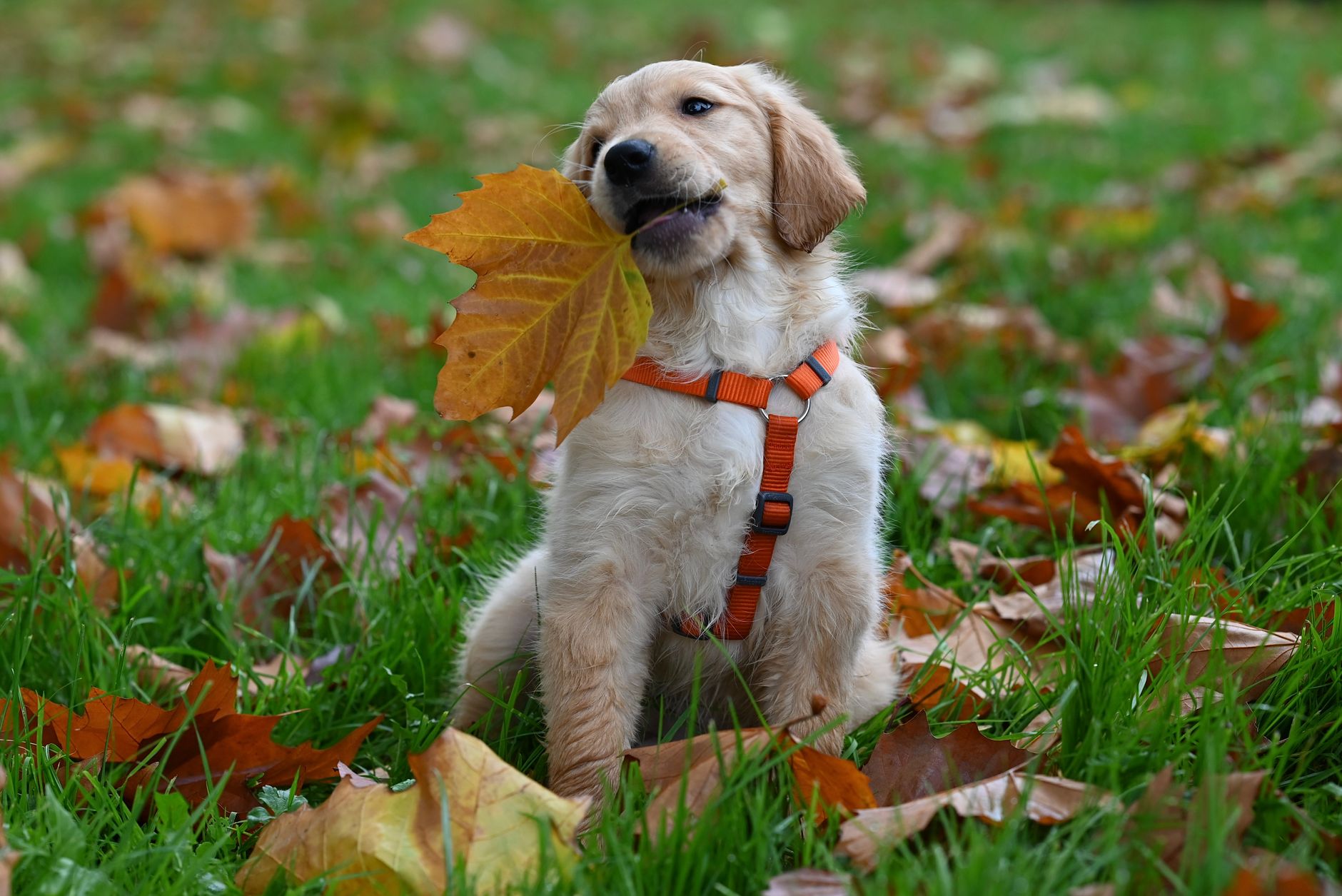
Did you know that a Golden Retriever puppy’s brain develops faster in the first 16 weeks than at any other point in its life? I learned this the hard way with my first Golden, Charlie, who chewed through a leather sofa cushion at 14 weeks because I underestimated his need for structured mental stimulation. Golden Retrievers are consistently ranked among the top three most popular dog breeds in the United States by the American Kennel Club (AKC), and for good reason—they’re affectionate, intelligent, and eager to please. But that eagerness can quickly turn into destructive behavior if you don’t channel it correctly. This guide breaks down exactly how to train your Golden Retriever puppy, from the first day home through adolescence, with specific schedules, product recommendations, and cost breakdowns you can follow immediately. Whether you’re a first-time dog owner or just new to the breed, these essential tips will help you raise a well-mannered companion.
12 min read
In This Article
- Breed Snapshot: What Makes Golden Retrievers Unique for Training
- Setting Up for Success: The First Week Home
- House Training: The 8-Week Plan
- Basic Obedience: Commands Every Golden Should Know
- Socialization: The Critical Window (8-16 Weeks)
- Mouthing and Bite Inhibition: Stop the Nipping
- Health and Nutrition During Training
- Cost of Ownership: Budgeting for Training and Care
- Frequently Asked Questions
Key Takeaways
- Breed Snapshot: What Makes Golden Retrievers Unique for Training
- Setting Up for Success: The First Week Home
- House Training: The 8-Week Plan
- Basic Obedience: Commands Every Golden Should Know
Breed Snapshot: What Makes Golden Retrievers Unique for Training
Golden Retrievers were originally bred in Scotland in the mid-19th century by Lord Tweedmouth, who crossed a Yellow Retriever with a Tweed Water Spaniel. The result was a dog with exceptional retrieving instincts, a soft mouth, and a relentless desire to please. According to the Golden Retriever Club of America, the breed standard emphasizes a “friendly, reliable, and trustworthy” temperament. This makes them highly trainable compared to other breeds—they typically score in the 90th percentile for trainability in canine cognition studies. However, their sociability also means they can be easily distracted by people, other dogs, or interesting smells. A 2020 study published in *Applied Animal Behaviour Science* found that Golden Retrievers respond to positive reinforcement 40% faster than breeds like Beagles or Huskies. But that doesn’t mean training is automatic—you need a consistent plan from day one.
But that doesn’t mean training is automatic—you need a consistent plan from day one.
Setting Up for Success: The First Week Home
Puppy-Proofing Your Space
Before your puppy arrives, remove hazards from floor level. Golden Retrievers are notorious for swallowing objects—Charlie once ate a sock that required a $1,200 veterinary surgery. Focus on electrical cords, small toys, shoes, and plants. Use a baby gate with a height of at least 30 inches (like the Regalo 192-inch Super Wide Gate, $44.99 on Amazon) to block off rooms. Measure the gap between bars—anything wider than 2 inches can allow a 10-week-old puppy to squeeze through. Cover outlets with outlet plugs (a 12-pack costs $5.99 at Home Depot). For crate training, choose a wire crate with a divider panel. The MidWest Homes for Pets iCrate (model 1536 for puppies up to 40 pounds, $59.99) includes a divider to prevent your puppy from soiling in one end and sleeping in the other. Set the crate in a quiet corner of the living room, not a separate room—your puppy needs to see you to feel secure.
Essential Supplies Checklist
- Crate: MidWest iCrate 30-inch (for adult Goldens, 70-75 pounds, you’ll need the 42-inch model, $89.99)
- Bedding: K9 Ballistics Chew Proof Elevated Dog Bed (42×28 inches, $129.99) — withstands puppy teething better than foam beds
- Food and water bowls: Stainless steel, 2-cup capacity each, like the YETI Boomer 8 Dog Bowl ($39.99) — ceramic or plastic can harbor bacteria
- Collar and leash: 1-inch wide nylon collar with quick-release buckle, 6-foot cotton leash (Rabbitgoo brand, $12.99 for the set)
- Toys: KONG Classic (size Large for puppies, $11.49), Nylabone Dura Chew (size Puppy, $9.99), and a soft plush toy for comfort
- Treats: Zuke’s Mini Naturals (chicken flavor, 16-ounce bag, $12.99) — small enough for training, only 2 calories each
- Cleaning supplies: Nature’s Miracle Stain and Odor Remover (32-ounce spray, $7.99) — enzyme-based, essential for accidents
quiet corner of the living room, not a separate room—your puppy needs to see you to feel secure.
House Training: The 8-Week Plan
The Crate Method
House training a Golden Retriever puppy typically takes 4-8 weeks if you’re consistent. The key is preventing accidents before they happen. Use the crate as a den, not a punishment. A puppy under 16 weeks old can physically hold their bladder for roughly one hour per month of age, plus one. So a 10-week-old puppy can hold it for about 3.5 hours maximum. Set a timer for every 2 hours during the day—take your puppy outside immediately after waking up, after eating, after playing, and before bedtime. At night, set an alarm for every 3 hours initially. The first week, I woke up at 2 AM and 5 AM to take Charlie out. By week three, he could make it through the night (10 PM to 6 AM) without accidents. Use a specific command like “Go potty” when you’re outside—say it as they’re eliminating, then reward immediately with a treat and praise. If your puppy has an accident indoors, clean it thoroughly with the enzyme cleaner to remove the scent. Never rub their nose in it—that’s outdated and ineffective, according to veterinary behaviorists at the American College of Veterinary Behaviorists.
Puppy Pad Transition
If you work during the day, consider using puppy pads in a designated area. Place them in a pen (like the Carlson Extra Wide Walk-Through Gate with Door, 24 inches tall, $54.99) near the crate. The pads should be at least 22×23 inches (Wearever brand, $19.99 for 50 pads). Gradually move the pad closer to the door over two weeks, then transition to outside. This method takes longer—typically 10-12 weeks—but reduces accidents when you can’t be home. However, avoid mixing pad training with outdoor training too early, as it confuses the puppy. Stick to one method for at least two weeks before switching.
Stick to one method for at least two weeks before switching.
Basic Obedience: Commands Every Golden Should Know
Sit, Stay, Come, and Down
Start training at 8 weeks old, but keep sessions short—5 minutes, three times daily. Golden Retrievers have short attention spans at this age. Use high-value treats like small pieces of boiled chicken or cheese (cut into pea-sized bits). For “sit,” hold a treat above your puppy’s nose and move it back over their head. As they look up, their bottom will naturally lower. Say “sit” as they do it, then reward. Repeat 10 times per session. For “stay,” start with your puppy in a sit position. Hold up your palm like a stop sign, say “stay,” take one step back, then return and reward. Gradually increase distance by one foot each session. For “come,” use a long line (a 15-foot cotton leash, $14.99 from PetSafe). Let your puppy wander, then call their name followed by “come” in a happy tone. Gently reel them in if needed, then reward lavishly. For “down,” start from a sit, hold a treat at nose level, then lower it to the ground between their paws. Say “down” as they follow the treat. This command is harder for Goldens because they’re naturally upright—expect 2-3 weeks of practice. According to the AKC Canine Good Citizen program, these four commands are the foundation for all advanced training. At 12 weeks, you can enroll in a puppy kindergarten class—local pet stores like Petco offer 6-week sessions for $119.99.
Leash Training: The 3-Step Method
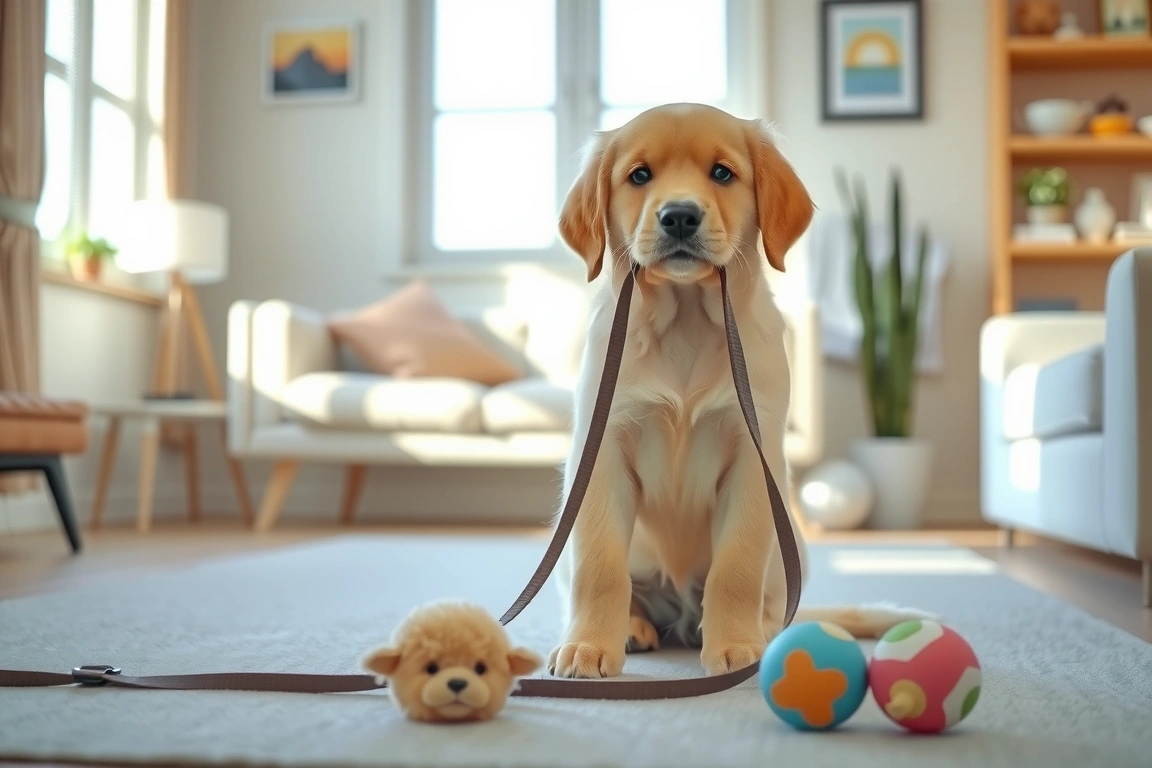
Golden Retrievers pull on leashes because they’re bred to retrieve—they want to get to the object of interest. Start indoors with a 6-foot leash. Step 1: Let your puppy drag the leash around the house for 10 minutes daily to get used to the feeling. Step 2: Hold the leash loosely and follow your puppy, rewarding them when the leash is slack. Step 3: Use the “turn and go” method—if your puppy pulls, stop moving. Stand still and wait for them to look back at you. When they do, say “yes” and reward. Then walk in the opposite direction. This teaches them that pulling stops forward movement. Avoid retractable leashes for training—they encourage pulling and can cause injuries if the puppy darts into traffic. Use a front-clip harness like the PetSafe Easy Walk (size small for puppies, $25.99) to reduce pulling by 70%, according to a 2018 study in the *Journal of Veterinary Behavior*.
Avoid retractable leashes for training—they encourage pulling and can cause injuries if the puppy darts into traffic.
Socialization: The Critical Window (8-16 Weeks)
Safe Exposure to People, Dogs, and Environments
The socialization period for puppies peaks between 8 and 16 weeks. Missing this window can lead to fearfulness or aggression later. According to the American Veterinary Society of Animal Behavior, puppies should meet at least 100 different people and 50 different dogs by 16 weeks. But do this safely—your puppy isn’t fully vaccinated until 16 weeks old. Carry them in public places (like a pet-friendly store or a friend’s backyard) to avoid exposing them to unvaccinated dogs’ feces. Invite vaccinated adult dogs you know to your home for supervised playdates. Use the “rule of 7s”: by 7 weeks old (before you get them), the breeder should have exposed them to 7 different surfaces, 7 new sounds, and 7 new people. Continue this at home. Introduce your puppy to different floor textures (carpet, tile, grass, gravel), sounds (vacuum cleaner, doorbell, thunderstorm recordings), and handling (touch paws, ears, mouth gently). Reward calm behavior with treats. If your puppy shows fear (tucked tail, ears back, yawning), back up and go slower. Never force interaction—that creates negative associations. I made this mistake with Charlie at 12 weeks when I took him to a busy farmer’s market. He was overwhelmed and developed a fear of crowds that took months to undo.

Puppy Class: What to Look For
Enroll in a puppy kindergarten class by 12 weeks. Look for classes that use positive reinforcement only—no prong collars, shock collars, or harsh corrections. The instructor should be certified through the Certification Council for Professional Dog Trainers (CCPDT) or the International Association of Animal Behavior Consultants (IAABC). Class size should be limited to 6-8 puppies. Expect to pay $150-$250 for a 6-week session. At class, your puppy will learn to greet other dogs politely, focus on you in distracting environments, and practice basic commands. The AKC Star Puppy program (cost: $20 for the kit plus class fees) provides a structured curriculum and a certificate upon completion.
Mouthing and Bite Inhibition: Stop the Nipping
Why Golden Retrievers Mouth
Golden Retrievers are bred to carry game in their mouths—they have what’s called a “soft mouth.” But as puppies, they explore the world through chewing and mouthing. This is normal, but you need to teach bite inhibition by 12 weeks. When your puppy mouths your hand, yelp loudly like a puppy (a high-pitched “ow!”), then immediately stop playing and turn away for 30 seconds. This mimics what a littermate would do. If they persist, leave the room for 1 minute. Consistency is key—everyone in the household must follow the same rule. Provide plenty of appropriate chew toys to redirect the behavior. KONGs stuffed with peanut butter (xylitol-free, like Teddie All Natural) and frozen for 2 hours are excellent for teething relief. Avoid games that encourage mouthing, like tug-of-war with your hands—use a rope toy (like the Mammoth Flossy Chews Rope, 12 inches, $8.99) instead. If your puppy breaks skin, clean the wound thoroughly and consult your vet—Golden Retrievers have a strong bite force (estimated at 235 PSI, according to a 2021 study in *PLOS ONE*), but with training, they learn to inhibit pressure.
Health and Nutrition During Training
Feeding Schedule for Optimal Learning
A well-fed puppy learns better. Golden Retriever puppies need a high-quality puppy food formulated for large breeds—this helps control growth rate to prevent hip dysplasia. I feed Charlie Purina Pro Plan Large Breed Puppy (chicken and rice formula, 34-pound bag, $54.99 at Chewy). Feed 3 meals a day until 6 months old, then switch to 2 meals. A 10-week-old puppy weighing 15 pounds should eat about 1.5 cups per day, split into three 0.5-cup meals. Use a measuring cup to be precise—overfeeding can lead to obesity, which stresses developing joints. Avoid foods with more than 25% protein or 12% fat, as too much can cause rapid growth. According to the Orthopedic Foundation for Animals (OFA), Golden Retrievers have a 20% incidence of hip dysplasia, so proper nutrition is critical. Schedule meals 30 minutes before training sessions—a hungry puppy is more motivated by treats, but a full stomach can cause lethargy.
Common Health Issues That Affect Training
Two health issues commonly disrupt training: ear infections and joint pain. Golden Retrievers have floppy ears that trap moisture, leading to infections in 20% of the breed, per a 2019 study in *Veterinary Dermatology*. Check ears weekly—if they smell yeasty or look red, clean with a vet-recommended solution like Zymox Otic (4-ounce bottle, $17.99). Joint issues like hip dysplasia or elbow dysplasia can make your puppy reluctant to sit or lie down. If your puppy hesitates to perform commands, see a vet for X-rays. The OFA recommends screening at 24 months, but early signs can appear at 6 months. Regular exercise on soft surfaces (grass, not concrete) helps. Also, Golden Retrievers are prone to hypothyroidism (affecting 1 in 200 dogs, according to the AKC Canine Health Foundation), which can cause lethargy and weight gain. Annual blood tests starting at 2 years can catch this early.
Cost of Ownership: Budgeting for Training and Care
First-Year Expenses Breakdown
Training a Golden Retriever puppy isn’t cheap. Here’s a realistic budget for the first year, based on my experience and data from the AKC:
- Initial supplies (crate, bedding, bowls, collar, leash, toys): $250-$400
- Puppy classes (two 6-week sessions): $300-$500
- Vet visits (vaccinations, exams, fecal tests, spay/neuter): $600-$1,200 (spay/neuter alone is $200-$500)
- Food (large-breed puppy formula, 12 bags per year): $650-$850
- Treats and training supplies (clicker, long line, treat pouch): $50-$100
- Pet insurance (recommended, especially for hip dysplasia coverage): $300-$600 per year (e.g., Healthy Paws plan with $250 deductible and 80% reimbursement, $35/month)
- Total first year: $2,150-$3,650
Ongoing annual costs (food, treats, vet checkups, insurance) run about $1,200-$2,000. This doesn’t include emergency vet visits—hip dysplasia surgery can cost $3,000-$7,000 per hip. Pet insurance is worth it; I wish I had it when Charlie needed his sock surgery.
Small changes, real momentum
Get practical guides and templates you’ll actually use — a few thoughtful emails a month.
Sources & further reading
- Taiwan (en.wikipedia.org)
Frequently Asked Questions
When should I start training my Golden Retriever puppy?
Start basic training the day you bring your puppy home, typically at 8 weeks old. Begin with house training and crate training immediately, as these are foundational. For formal obedience commands like sit and stay, start at 8 weeks with 5-minute sessions. Enroll in puppy kindergarten by 12 weeks to maximize socialization. The first 16 weeks are the most critical for learning, so don’t delay—every day you wait, you miss a key developmental window.
How do I stop my Golden Retriever puppy from jumping on people?
Golden Retrievers jump because they’re excited and want to greet people face-to-face. Teach an alternative behavior, like “sit.” When your puppy approaches someone, ask them to sit before they can jump. If they jump, turn your back and ignore them for 10 seconds. Reward calm behavior with attention. Practice with friends or family members who can follow your instructions. Consistency is key—everyone must ignore jumping. This usually takes 2-4 weeks of daily practice. Avoid kneeing the dog or pushing them down—that can cause injury or fear.
What treats are best for training a Golden Retriever puppy?
Use small, soft treats that your puppy can eat quickly. Zuke’s Mini Naturals are excellent—they’re 2 calories each and come in chicken, peanut butter, and bacon flavors. For high-value situations (like recalls or difficult commands), use tiny pieces of boiled chicken breast, low-fat cheese (like mozzarella string cheese, cut into pea-sized bits), or freeze-dried liver treats (like Vital Essentials Freeze-Dried Dog Treats, 3-ounce bag, $11.99). Avoid treats with more than 5% fat or artificial preservatives. Always check for xylitol, which is toxic to dogs—found in some peanut butters and sugar-free treats.
How long does it take to house train a Golden Retriever puppy?
With consistent crate training and a schedule, most Golden Retrievers are fully house trained by 4-6 months of age. However, some puppies may take up to 8 months, especially if you work full-time or have irregular hours. Use a schedule: take your puppy out every 2 hours during the day, after every meal, after every nap, and after play sessions. At night, set alarms for every 3-4 hours initially. Accidents are normal until about 12 weeks old—never punish them. If your puppy isn’t house trained by 6 months, consult a veterinarian to rule out urinary tract infections or other medical issues.
Should I use a clicker for training my Golden Retriever puppy?
Yes, clicker training is highly effective for Golden Retrievers because it marks the exact moment they perform the desired behavior. Use a standard clicker (like the i-Click, $5.99 on Amazon). First, “charge” the clicker by clicking and giving a treat 10-15 times—this creates an association. Then, use the clicker to mark behaviors like sit, down, or touch. The click replaces the word “yes” and is more precise. Golden Retrievers respond well to clicker training because they’re eager to please and learn through positive reinforcement. I’ve used it with Charlie for tricks like “spin” and “play dead,” and it cut training time by about 30% compared to verbal markers alone.
Keep reading
🐾 Our Top Pick
Editor’s Pick: Essential puppy supplies and a foundational dog training book.
For the Love of Your Pet
Care guides, breed insights, and gentle advice for happier pets.