Disclosure: This post contains affiliate links. If you click through and make a purchase, we may earn a small commission at no extra cost to you. Thank you for supporting this site!
Ever notice that the budgie in the pet store window looks nothing like the “parakeet” your neighbor’s kid brought home three years ago? That’s because the average pet-store budgerigar comes from mass-breeding operations with a documented lifespan of just 5 to 8 years, while a well-sourced bird from a specialty breeder — fed a pellet-based diet and given daily flight time — can push past 12 years. I learned this the hard way with my first budgie, Otis, who developed a fatty liver at age 4 because I fed him nothing but a seed mix from a big-box pet store for two years straight. This guide covers what actually keeps a parakeet alive, calm, and talking — with real cage dimensions, real food brands, and real vet costs, not vague “give them a nice home” advice.
10 min read
In This Article
- Budgerigar Snapshot: What You’re Actually Signing Up For
- Temperament and Personality Scores
- Daily Exercise and Mental Enrichment Needs
- Grooming, Molting, and Hygiene Requirements
- Common Health Issues and Vet Care Schedule
- Cage and Living Space Setup (Real Dimensions)
- Cost of Ownership: Real Numbers
- Is a Parakeet Right for You? Ideal Owner Profile
Key Takeaways
- Budgerigar Snapshot: What You’re Actually Signing Up For
- Temperament and Personality Scores
- Daily Exercise and Mental Enrichment Needs
- Grooming, Molting, and Hygiene Requirements
Budgerigar Snapshot: What You’re Actually Signing Up For
The bird most Americans call a “parakeet” is technically the budgerigar (Melopsittacus undulatus), a small parrot native to the Australian outback. Adults run 6.5 to 8 inches long including tail feathers and weigh between 25 and 40 grams — roughly the weight of a AA battery. Despite the small frame, they’re loud for their size, producing a near-constant warbling chatter that sits around 60-70 decibels, comparable to a running dishwasher.
Lifespan is the number most first-time owners get wrong. Pet-store budgies, often bred quickly and inbred for color mutations, commonly live 5-8 years according to data cited by the Association of Avian Veterinarians. English budgies (the larger show variety) and birds from dedicated breeders who screen for genetic diversity sometimes reach 10-15 years with a proper pellet diet and annual avian vet checkups. The oft-repeated “world’s oldest budgie” claim of 29 years (a bird named Charlie in the UK) is an outlier, not a realistic planning number — I’d budget for 8-10 years and treat anything beyond that as a bonus.
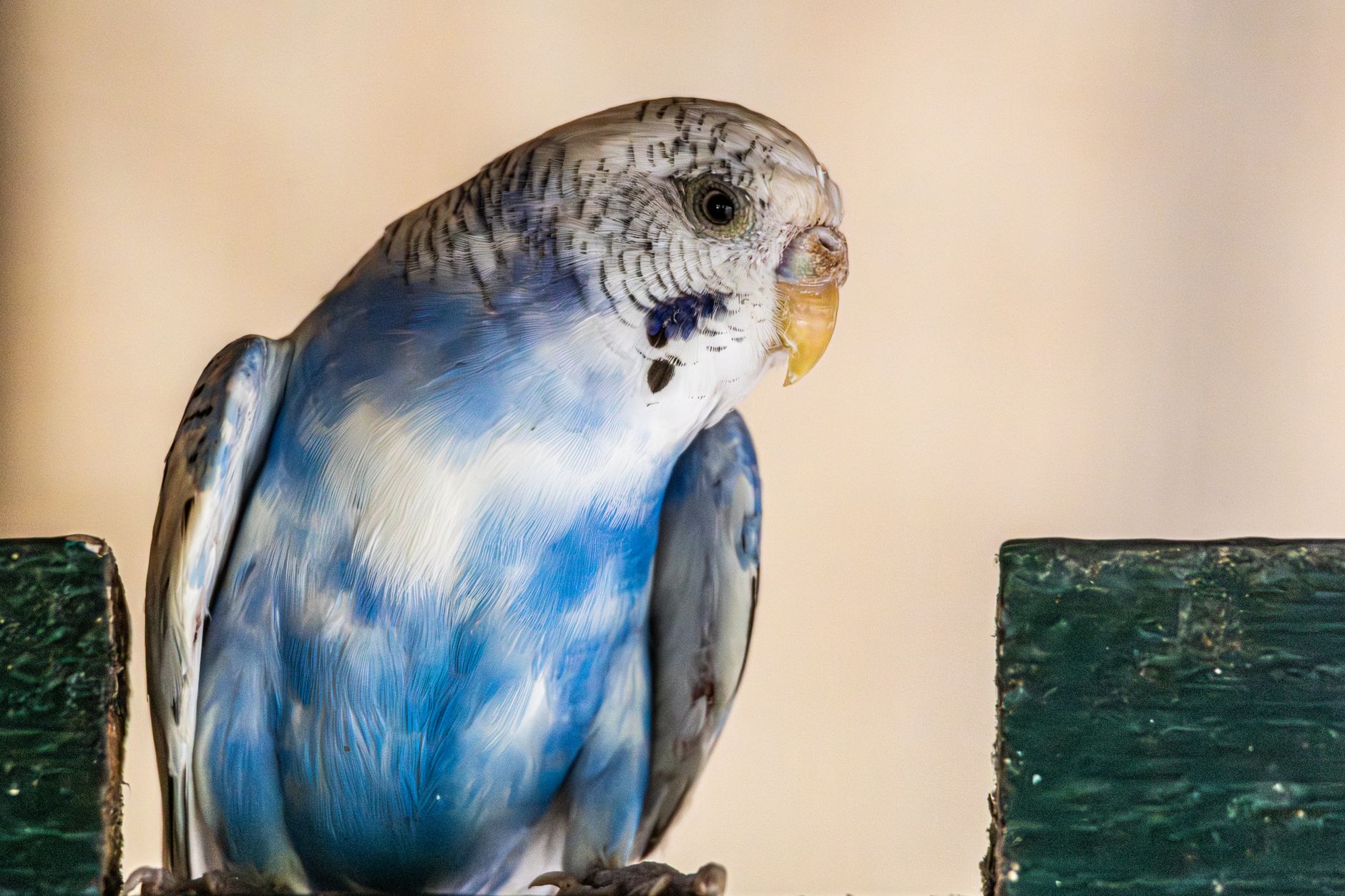
Males and females differ mainly at the cere (the fleshy area above the beak): blue/purple in mature males, tan/brown or crusty white in females. Females are more prone to reproductive issues like egg binding, which matters when you’re deciding which bird to bring home.
Females are more prone to reproductive issues like egg binding, which matters when you’re deciding which bird to bring home.
Temperament and Personality Scores
Budgies score differently than most companion parrots on the traits that actually affect daily life with them. Here’s how I’d rate a typical, well-socialized budgie on a 10-point scale, based on years of handling multiple birds and comparing notes with other keepers:
- Sociability with humans: 7/10 — Hand-raised or patiently tamed budgies will step up onto a finger and tolerate head scratches, but they bond more slowly than cockatiels and rarely crave physical affection the way a lovebird does.
- Trainability: 8/10 — Budgies can learn tricks and speech surprisingly well. Puck, a male budgie owned by Camille Jordan of California, holds the Guinness World Record for largest vocabulary in a bird at 1,728 words, recorded in 1995. Most pet budgies won’t get anywhere near that, but 10-20 words with consistent daily training (5-10 minutes, twice a day) is realistic.
- Independence tolerance: 3/10 — Budgies are flock animals. A single bird left alone 10+ hours a day without interaction will often become anxious or start feather-plucking.
- Noise level: 6/10 — Constant soft chatter, occasional shrieking at dawn and dusk. Not neighbor-disturbing like a conure, but not silent either.
- Beginner-friendliness: 8/10 — Low cost of entry, forgiving of minor husbandry mistakes, and small enough for apartment living.
One thing that surprises new owners: two budgies housed together will often bond so tightly with each other that they stop bonding with you. If hand-taming and talking are priorities, a single, well-handled bird outperforms a pair every time.
Daily Exercise and Mental Enrichment Needs
Budgies are strong, fast fliers in the wild, covering miles daily across the Australian grasslands. In captivity, that translates to a hard minimum of 1-2 hours of supervised out-of-cage flight time per day, ideally in a room with windows covered (birds don’t perceive glass as a barrier) and ceiling fans off.
Inside the cage, enrichment matters as much as raw exercise minutes. Rotate toys weekly rather than leaving the same three toys in for months — budgies habituate to objects fast and stop interacting with stale setups. I’ve had good results with Bonka Bird Toys foraging balls ($8-12 each) and Planet Pleasures Wicker Ball Foot Toys ($6-10), swapped on a two-week rotation with at least one shreddable toy (like a Java wood or vine ball) always present.
A bored budgie without flight time or toy rotation will often start over-preening or plucking feathers around the chest — I’ve seen this happen within three weeks of cage confinement during a home renovation, and it took nearly two months of daily flight sessions to fully reverse. If you can’t commit to at least 60 minutes of active out-of-cage time daily, a budgie isn’t a low-maintenance choice — it just looks like one in the store.
If you can’t commit to at least 60 minutes of active out-of-cage time daily, a budgie isn’t a low-maintenance choice — it just looks like one in the store.
Grooming, Molting, and Hygiene Requirements
Budgies don’t need baths in the traditional sense, but most enjoy misting from a spray bottle 2-3 times a week or a shallow dish of water for self-bathing. Skip the bird-specific shampoos sold at some pet stores — plain filtered or dechlorinated tap water is sufficient and avoids stripping the feathers’ natural oils.
Molting happens roughly every 6-12 months and lasts 2-4 weeks, during which you’ll see a noticeable increase in loose feathers and possibly some irritability (new pin feathers coming in can be itchy and mildly uncomfortable). This is normal and doesn’t need veterinary intervention unless bald patches persist beyond 6 weeks.
- Nail trims: Usually unnecessary if the cage has varied-diameter natural perches (see cage section below); if nails curl and catch on fabric, an avian vet trim runs $15-25.
- Beak maintenance: A healthy beak self-wears against cuttlebone and mineral blocks (Kaytee Cuttlebone, $2-4 for a 2-pack). Overgrown or flaky beaks can signal liver disease or mites and warrant a vet visit.
- Cage cleaning: Wipe down perches and dishes daily, do a full substrate change 2-3 times a week, and deep-clean the entire cage with a bird-safe disinfectant (like Poop-Off, $10 for a 16 oz spray bottle) monthly.
Common Health Issues and Vet Care Schedule
Budgies mask illness well, so by the time symptoms are obvious — fluffed feathers, tail bobbing while breathing, sitting at the bottom of the cage — the bird is often already in crisis. Finding an avian-certified vet before you need one is not optional; general small-animal vets frequently miss bird-specific conditions.
The most common issues I’ve encountered or read about in avian veterinary literature include:
- Scaly face mites (Knemidokoptes pilae): Causes crusty, honeycombed patches around the beak and legs. Treatable with prescription ivermectin drops from an avian vet, typically $50-80 for the visit plus medication.
- Tumors: Budgies, due to decades of inbreeding for color mutations, have a notably high rate of lipomas and, in females, ovarian/testicular tumors as they age. This is one of the more honest downsides of the breed — it’s not rare.
- Psittacosis (chlamydiosis): A bacterial infection transmissible to humans (flu-like symptoms), which is why routine quarantine of new birds for 2-4 weeks before introducing them to existing flocks matters.
- Egg binding: Affects females, especially those without a male, and can be fatal without emergency vet care within 24-48 hours of symptoms.
- Fatty liver disease: Almost always diet-related, tied directly to seed-heavy diets high in fat and low in vitamin A.
Budget for an annual wellness exam ($45-90 depending on region) plus an emergency fund of at least $150-300, since avian emergency visits at specialty clinics can run $200-400 once bloodwork and X-rays are involved.
Fatty liver disease: Almost always diet-related, tied directly to seed-heavy diets high in fat and low in vitamin A.
Cage and Living Space Setup (Real Dimensions)
Bar spacing is the detail most first-time buyers skip, and it’s the one that gets birds injured. Budgies need bar spacing of 1/2 inch (about 12-13mm) or less — anything wider risks a bird getting its head stuck trying to squeeze through, which I’ve seen happen with a cheap $40 cage that advertised “parakeet size” but had 5/8-inch spacing.
Minimum cage size for one budgie is often listed as 18″L x 18″W x 18″H, but that’s a bare survival minimum, not a good one. I’d recommend treating that number as the floor, not the goal:
- Prevue Hendryx Flight Cage, Model 3151: 31″L x 20.5″W x 53″H, 1/2-inch bar spacing, typically $140-170. This is the cage I’d point most owners toward — tall enough for real flight, not just hopping.
- Vision Bird Cage Model M01 (Hagen): 21.3″L x 15″W x 20.5″H, molded plastic base with a divider that lets you split it for two birds, usually $100-130. Good for smaller spaces but tighter for flight than the Prevue.
- A&E Cage Co. Victorian-style cages: Budget-friendly at $70-90, but check bar spacing carefully — some of their larger “flight” models are built for conures and exceed the 1/2-inch max safe for budgies.
Perch variety matters more than most owners expect. Use natural wood perches (java wood or manzanita) in at least two different diameters — 3/8 inch and 3/4 inch — rather than the uniform plastic dowels that ship with most cages. Uniform perches concentrate pressure on the same spot of the foot repeatedly, which over years contributes to arthritis and pressure sores called bumblefoot.
Cost of Ownership: Real Numbers
Budgies get marketed as the “cheap” bird option, and the purchase price is genuinely low, but the full first-year cost surprises a lot of new owners. Here’s a realistic breakdown based on mid-range product choices:
- Bird itself: $15-40 (pet store) or $25-60 (specialty breeder, often healthier genetics)
- Cage (Prevue 3151 or similar): $140-170
- Initial setup — dishes, perches, cuttlebone, toys: $40-65
- Monthly food (ZuPreem FruitBlend Smart Selects, 2 lb bag, $12-15, lasts 4-6 weeks for one bird): $12-18/month
- Toy rotation and replacement: $10-15/month
- Annual avian wellness exam: $45-90
- Emergency vet fund (recommended, not guaranteed spend): $150-300/year
Add it up and a realistic first year lands between $500 and $750 once you include the cage and setup. Every subsequent year, ongoing costs (food, toys, wellness visit) typically run $250-400, before factoring in any emergency care. Compare that to a bag of Harrison’s Bird Foods Adult Lifetime Fine pellets, a premium organic option running $16-20 per pound — it costs more per month than ZuPreem but some owners report better feather condition and fewer digestive issues, though I’d call that anecdotal rather than a settled fact.
Is a Parakeet Right for You? Ideal Owner Profile
Budgies suit people who want daily interaction without the decades-long commitment or destructive chewing power of a larger parrot like an African Grey or a Macaw. Apartment dwellers do well with them because of the compact cage footprint, though thin walls mean the dawn chatter will be Audible to neighbors.
They’re a poor fit for households that are empty 10+ hours a day with no second bird for company, and a poor fit for anyone unwilling to commit to daily flight time — a budgie stuck in an 18x18x18 cage 23 hours a day is a genuinely different (and unhappier) animal than one getting real flight sessions. Families with kids over 6 or 7 tend to do well, since budgies can nip when startled but lack the bite force to cause real injury, unlike a cockatoo or macaw.
If you’re drawn to the idea of a talking, trainable pet but aren’t sure you can handle a 20-30 year commitment (the realistic lifespan of larger parrots), a budgie is genuinely one of the more honest starter birds — as long as you go in knowing the 5-10 year lifespan and daily time commitment upfront.
Getting a budgie right comes down to three things: buy a cage with 1/2-inch bar spacing at minimum 20″x20″x30″ (the Prevue Hendryx 3151 is a safe default), commit to 60-120 minutes of supervised flight time daily, and switch from a seed-only diet to a 70% pellet, 20% fresh vegetable, 10% treat-seed ratio before fatty liver disease becomes a risk. Budget $500-750 for the first year and $250-400 annually after that, plus an emergency fund for the vet visit you hope you won’t need. If you want a compact, trainable, genuinely interactive bird and can give it real daily attention rather than decorative cage presence, a well-sourced budgie is one of the better small-pet decisions you can make.
Can two budgies live in the same cage without fighting?
Yes, in most cases, especially if they’re introduced young or as an already-bonded pair from the breeder. Give them at least 20% more floor space than a single-bird cage requires, and watch for one bird monopolizing food dishes during the first two weeks. Same-sex pairs occasionally squabble over dominance, but serious injury is uncommon if the cage has multiple feeding stations.
Why does my budgie bob its tail while breathing?
Mild tail bobbing after strenuous flight is normal, but constant bobbing at rest usually signals respiratory distress, potentially from a fungal infection like aspergillosis or a bacterial issue. This warrants an avian vet visit within 24-48 hours rather than a wait-and-see approach, since budgies decline quickly once breathing is compromised.
How do I know if my budgie’s diet is actually balanced?
Check the ingredient label on your food: a straight seed mix (millet, canary seed, sunflower) should make up no more than 10% of the diet, with a formulated pellet like ZuPreem FruitBlend or Harrison’s Adult Lifetime making up 60-70%, and fresh vegetables like shredded carrot, kale, or bell pepper filling the remaining 20-25%. If your bird’s droppings are consistently loose and dark green, or the beak looks flaky and overgrown, that’s often a sign the diet needs adjusting — ask your av
Small changes, real momentum
Get practical guides and templates you’ll actually use — a few thoughtful emails a month.
For the Love of Your Pet
Care guides, breed insights, and gentle advice for happier pets.