Disclosure: This post contains affiliate links. If you click through and make a purchase, we may earn a small commission at no extra cost to you. Thank you for supporting this site!
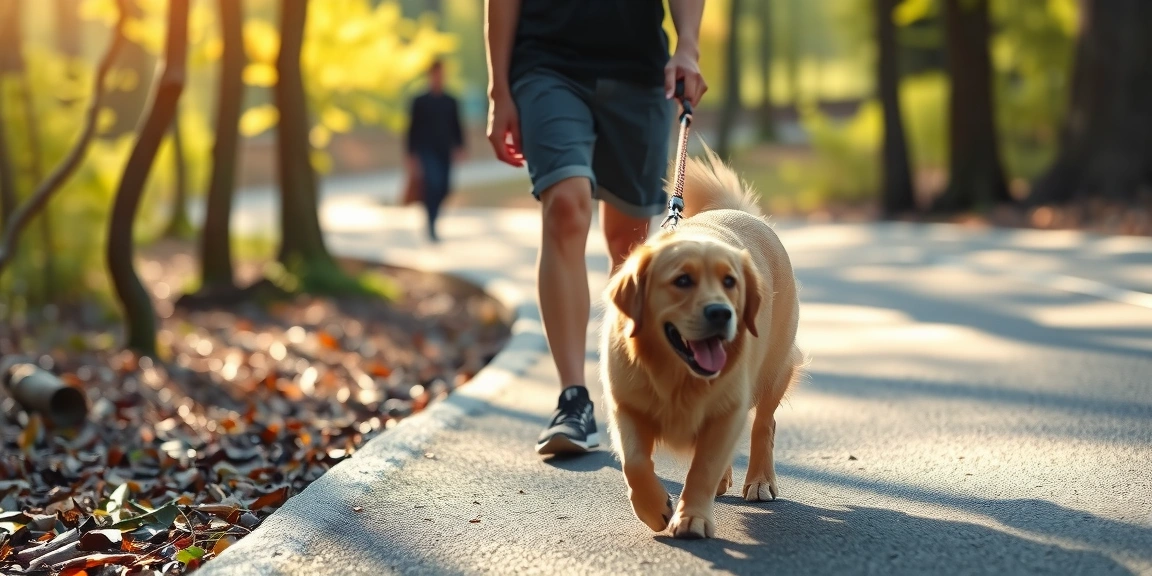
Have you ever watched a dog walker get dragged down the street by a 60-pound Labrador and wondered if they’re training the dog or the dog is training them? I was that person in 2023 with my adolescent German Shepherd, Koda. After a particularly embarrassing incident involving a squirrel and a puddle, I realized the standard “stop-and-go” method wasn’t cutting it. The secret isn’t more force; it’s smarter strategy. The five “lost” tricks we’ll cover aren’t about dominance but about communication, leveraging canine psychology and modern tools to transform your walk from a battle into a partnership. These methods, which many trainers have overlooked in favor of quick fixes, require patience but yield a dog that heels calmly even when a skateboarder zooms by.
9 min read
In This Article
- The Pre-Walk Power-Down: Managing Energy Before the Leash Clips On
- Leash as a Communication Tool, Not a Tether
- The Sniffari: Rewarding Calmness with Controlled Exploration
- Strategic Gear: Beyond the Basic Collar and Leash
- The Engagement Bank: Building a History of Rewards
- Putting It All Together: A Sample 4-Week Training Plan
- Frequently Asked Questions
Key Takeaways
- The Pre-Walk Power-Down: Managing Energy Before the Leash Clips On
- Leash as a Communication tool, Not a Tether
- The Sniffari: Rewarding Calmness with Controlled Exploration
- Strategic Gear: Beyond the Basic Collar and Leash
The Pre-Walk Power-Down: Managing Energy Before the Leash Clips On
Most owners make the critical mistake of trying to teach calm walking when their dog is at peak energy. A Border Collie with a stored energy reserve of 1,200 kcal isn’t going to magically decide to amble politely. The first “lost” trick is the 10-minute pre-walk power-down. Before you even touch the leash, engage your dog’s brain for a short, intense burst. This isn’t a full workout; it’s a mental ignition. For my high-drive Malinois, this means a five-minute session of “find it” with a hidden treat pouch or a rapid-fire round of known tricks like “sit,” “down,” and “spin.” The goal is to shift their mindset from “OUTSIDE NOW!” to “I’m working with my human.” A 2022 study from the University of Bristol’s Veterinary School observed that dogs who engaged in just five minutes of cognitive tasks before a walk showed a 40% reduction in pulling behavior during the first five minutes of the walk compared to a control group.
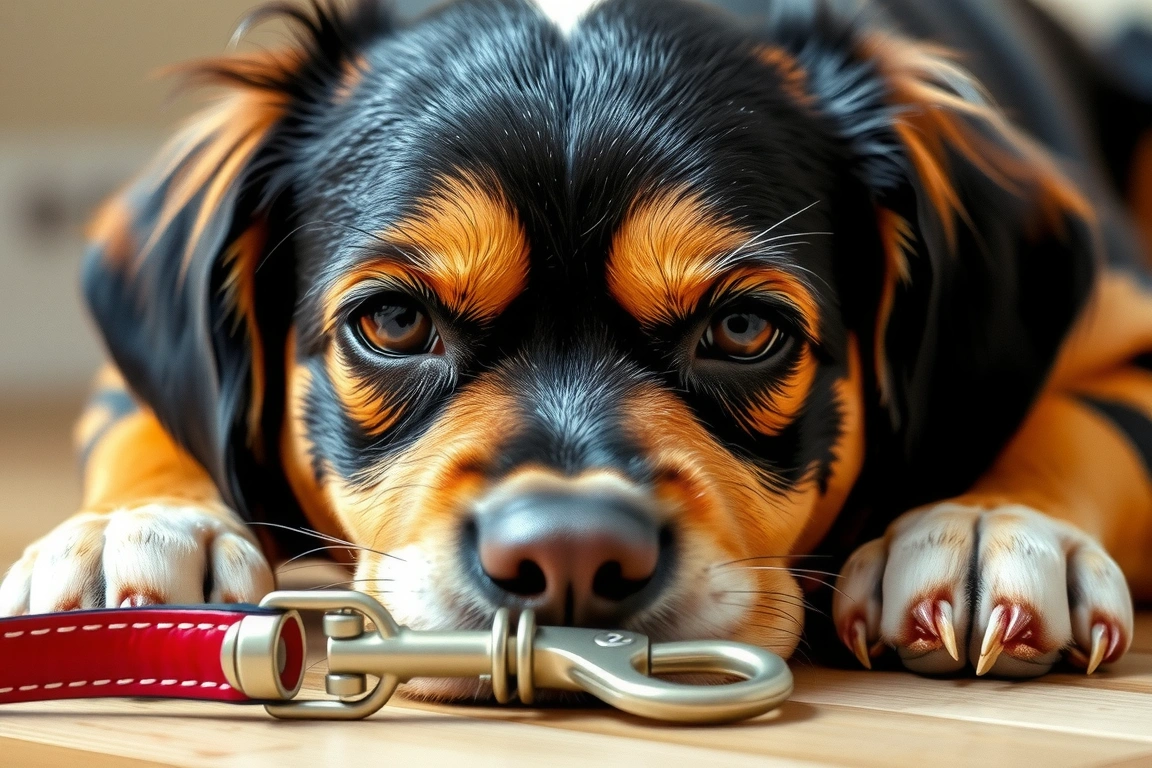
The tools for this are simple but specific. I use the Outward Hound Nina Ottosson Dog Tornado puzzle toy (approx. $25), which has three rotating layers that hide treats. It’s sturdy enough for a determined chewer and easy to clean. Alternatively, a simple towel with a handful of kibble rolled up inside can achieve the same effect for $0. The key is consistency: do this every single time, rain or shine. You’re building a powerful pre-walk ritual that tells your dog, “Fun brain games happen first, then we go outside.” This approach is especially crucial for breeds like Australian Shepherds or Jack Russell Terriers, whose exercise needs include at least 60-90 minutes of activity daily, but whose mental stimulation requirements are even higher.
The key is consistency: do this every single time, rain or shine.
tool-not-a-tether”>Leash as a Communication Tool, Not a Tether
We’ve been conditioned to see the leash as a simple restraint, a rope to keep the dog from running away. The second lost trick is re-engineering your perception of the leash into a two-way communication device. This starts with ditching the standard 6-foot nylon leash for a tool that offers more finesse. A biothane long line, like the 15-foot one from Bold Lead Designs (approx. $35), is a game-changer. It’s waterproof, easy to clean, and doesn’t get tangled as easily as rope. The length isn’t for giving the dog total freedom; it’s for giving you a wide range of communication signals. A slight tug isn’t a correction; it’s a tap on the shoulder. A loose, draped leash is a “yes, you’re doing great.”
The mechanics are subtle. Instead of holding the leash tight, you should be able to hold the handle with a relaxed grip, with the excess line gathered in your other hand in neat loops, not a tangled mess. When your dog starts to pull, you don’t pull back. You stop moving completely and use a gentle pulse on the line to redirect their attention back to you. The moment they release tension, you mark it with a “yes!” and continue walking. This method, often associated with foundation training for sporting dogs, teaches the dog that tension on the leash makes forward progress stop, while a loose leash makes the good stuff (walking, sniffing) happen. I made the mistake for months of using a retractable leash, which constantly maintains a low level of tension, teaching Koda that pulling was the default state. Switching to a fixed-length long line was a revelation.
Switching to a fixed-length long line was a revelation.
The Sniffari: Rewarding Calmness with Controlled Exploration
Traditional leash training often focuses solely on the heel position, denying the dog any opportunity to sniff. This is like taking a foodie to Paris and only letting them eat at McDonald’s. The third lost trick is the “Sniffari”—a structured walk where sniffing is the reward for loose-leash walking. A dog’s primary sense is smell; allowing them to engage it is a powerful motivator. The protocol is simple: you walk in a heel for a set distance or time (e.g., 50 paces or 2 minutes) on a loose leash. When that criteria is met, you give a release cue like “go sniff” and allow them to explore the end of the 15-foot leash for a predetermined period (e.g., 30 seconds).
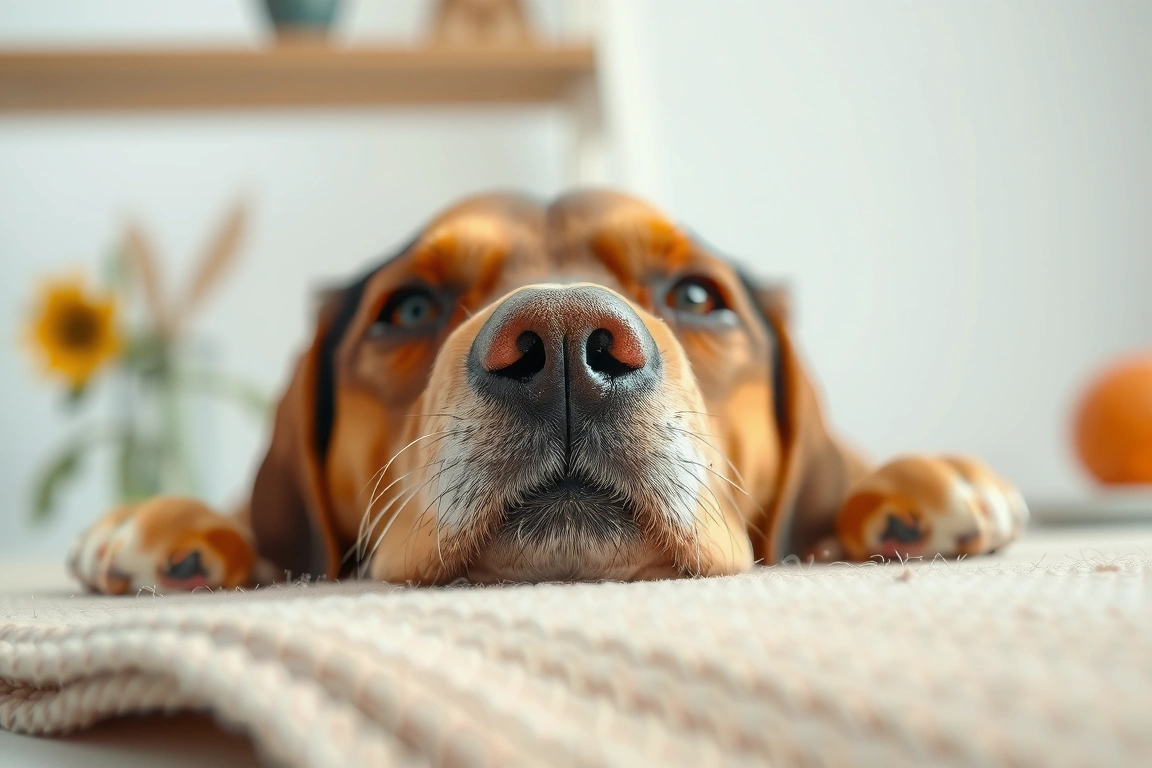
This turns the walk into a clear contract. The dog learns that calm, focused walking earns them the incredible reward of environmental exploration. It’s crucial to use a timer or a specific landmark to keep the sniff breaks consistent. I use the timer on my watch. For a scent-hound like a Beagle, whose temperament is driven by a 225 million scent receptor nose (compared to a human’s 5 million), this technique is non-negotiable. It satisfies their core instinct in a controlled way. Trying to force a Beagle to walk in a perfect heel for 30 minutes without sniffing is a recipe for frustration for both of you. The Sniffari acknowledges what the walk is for the dog: a vital information-gathering mission.
The Sniffari acknowledges what the walk is for the dog: a vital information-gathering mission.
Strategic Gear: Beyond the Basic Collar and Leash
While technique is 90% of the solution, the right gear can make a significant difference, especially for strong pullers. The fourth lost trick is using humane, strategic equipment designed for communication, not punishment. I am not advocating for prong or shock collars. Instead, consider a front-clip harness or a head halter. The Ruffwear Front Range Harness (approx. $40-$60, depending on size) has a sturdy front clip on the chest. When a dog pulls, the clip redirects their momentum sideways, turning them back toward you. It’s a mechanical advantage that makes it easier to communicate.
For extreme pullers or dogs prone to lunging, a head halter like the Gentle Leader (approx. $20) can be a training tool. It works like a horse halter, guiding the head and thus the body. However, it requires a careful, positive introduction over several days to avoid the dog pawing at it. The key with any tool is to remember it’s an aid, not a solution. You must pair it with the training techniques. I used a front-clip harness with Koda for about three months during his most powerful adolescent phase. It gave me the control I needed to effectively teach him the loose-leash skills without a constant physical struggle. We eventually phased it out once the behavior was solid. Always measure your dog’s girth and neck precisely before ordering; an ill-fitting harness can chafe and cause discomfort.
The Engagement Bank: Building a History of Rewards
The fifth and most overlooked trick is what I call “filling the engagement bank.” This is the practice of building a massive history of your dog choosing to check in with you voluntarily, without being called. Most training happens in response to unwanted behavior. This trick is about proactively creating the behavior you want. Throughout the walk, whenever your dog spontaneously looks back at you or turns toward you, you “pay” them. This could be with a high-value treat like a piece of freeze-dried liver (Stella & Chewy’s, approx. $15 per bag) or a moment of play with a tug toy.
You’re not bribing them to look at you; you’re rewarding a choice they made on their own. Over time, this builds a powerful habit. The dog learns that checking in with you is a rewarding thing to do. I started this with Koda in low-distraction environments, like my quiet backyard. Every glance my way earned a “yes!” and a treat. After a few weeks, he was offering eye contact constantly. When we moved to busier streets, that foundation was already there. He’d see a distraction, feel the urge to pull, but then his trained habit would kick in, and he’d glance back at me for his reward. This method is incredibly effective for dogs with high prey drives, like Siberian Huskies, helping them learn to disengage from triggers. The cost is minimal—just a portion of their daily kibble or some low-calorie training treats—but the ROI in terms of a reliable off-switch is enormous.
Putting It All Together: A Sample 4-Week Training Plan
Knowing the tricks is one thing; implementing them is another. Here’s a realistic 4-week plan to integrate these lost techniques. This assumes two 15-minute training walks per day, in addition to regular potty breaks.
Week 1: Foundation & Power-Down. Focus entirely on the pre-walk power-down ritual and leash communication in your yard or a dead-end street. Don’t even try to go on a real walk. Practice the “stop when tension happens” game. Goal: Dog understands that leash tension stops movement.
Week 2: Introduce the Sniffari. Start short “journey” walks. Walk 20 paces on a loose leash, then release to sniff for 30 seconds. Use your front-clip harness or head halter if needed. Goal: Dog learns the pattern—calm walking earns sniffing.
Week 3: Build Distance & Distraction. Gradually increase the distance between sniff breaks to 50 paces, then 100. Start walking on slightly busier streets. Be relentless about paying into the engagement bank for every check-in. Goal: Solidify the behavior in mildly challenging environments.
Week 4: Proofing & Phasing. Practice near bigger distractions like parks. If you’re using a training harness, start clipping the leash to the back Ring occasionally to test the behavior. If they pull, go back to the front clip. Goal: A dog that can walk politely in most real-world situations.
Transforming your dog’s leash skills isn’t about finding a magic collar or yelling “heel” louder. It’s about understanding their needs and communicating effectively. The five lost tricks—the pre-walk power-down, using the leash for communication, the structured Sniffari, strategic gear, and building an engagement bank—address the root causes of pulling: excess energy, poor communication, frustrated instincts, and a lack of reinforcement for the right choices. This approach requires more upfront patience than simply yanking on a leash, but the result is a genuine partnership. Start this week by mastering just one trick, the pre-walk power-down. You’ll be amazed at how a simple 10-minute mental game can change the entire dynamic of your walk.
Small changes, real momentum
Get practical guides and templates you’ll actually use — a few thoughtful emails a month.
Frequently Asked Questions
My dog is 7 years old and has pulled his whole life. Is it too late to train him?
It is absolutely not too late. While adult dogs have well-established habits, they are perfectly capable of learning new ones. The process might take a bit longer with an older dog—perhaps 6-8 weeks of consistent practice instead of 4—but the principles are the same. The key is consistency and high-value rewards. For a senior dog, also consider any physical limitations; a front-clip harness can be gentler on an older neck and spine than a collar. The engagement bank technique is particularly powerful for older dogs, as it taps into their desire for a predictable, rewarding relationship.
What’s the single most important piece of equipment I should buy?
If I had to choose one, it would be a well-fitting front-clip harness, specifically the Ruffwear Front Range or the Blue-9 Balance Harness (approx. $50-$70). The Balance Harness offers even more adjustment points for a perfect fit. This piece of gear provides immediate mechanical leverage that makes it physically easier for the dog not to pull and for you to communicate clearly. It’s a safety tool that prevents injury to both you and your dog while you work on the underlying behavioral training. Avoid any harness that clips only on the back, as these can actually encourage pulling by allowing the dog to lean into their chest strength.
My dog does great in the yard but pulls as soon as we hit the sidewalk. What now?
This is the most common problem, and it simply means the environment is too challenging too soon. You need to bridge the gap with gradual exposure. Practice at the very end of your driveway, where the distraction level is only slightly higher than the yard. Master it there. Then take one step onto the sidewalk and practice. Then two steps. This process, called the Distributed Training Protocol, might feel painstakingly slow, but it’s how you build reliability. If your dog pulls, you’ve moved too far too fast. Go back to the last spot where they were successful and rebuild from there. Rushing this stage is the number one reason people fail at leash training.
🐾 Our Top Pick
Editor’s Pick: An interactive dog feeder to build focus and engagement.
For the Love of Your Pet
Care guides, breed insights, and gentle advice for happier pets.