Disclosure: This post contains affiliate links. If you click through and make a purchase, we may earn a small commission at no extra cost to you. Thank you for supporting this site!
I’ll never forget the first time Max lunged at another dog. My arm nearly came out of its socket, and I spent the next ten minutes apologizing to a terrified owner while my 85-pound German Shepherd barked like a demon possessed. That walk ended with me sitting on the curb, leash wrapped around my hand, wondering if I’d made a huge mistake. Max wasn’t aggressive—he was scared. But his leash reactivity turned every walk into a battlefield. Over the next six months, I learned exactly what it takes to turn a reactive GSD into a reliable walking partner. This case study covers the gear, the training, and the honest costs involved.
Understanding German Shepherd Temperament and Reactivity
German Shepherds consistently rank in the top three most intelligent breeds, with a temperament score of 85.5 out of 100 on the AKC’s temperament test. But that intelligence comes with a double edge. They’re bred to be alert, protective, and quick to react—traits that make them excellent working dogs but also prime candidates for leash reactivity. Around 40% of GSD owners report some form of reactivity in surveys, often stemming from under-socialization during the critical 8–16 week window or from their natural herding and guarding instincts.
Reactivity in GSDs usually shows up between 12 and 18 months, right when their confidence is growing. Max started at 14 months. His triggers: other dogs, skateboards, and bicycles. The key measure is threshold distance—the point at which your dog notices a trigger and reacts. For Max, that was about 50 feet. Anything closer triggered barking and lunging. Understanding that number is the foundation of any training plan.
The Case Study: Meet Max
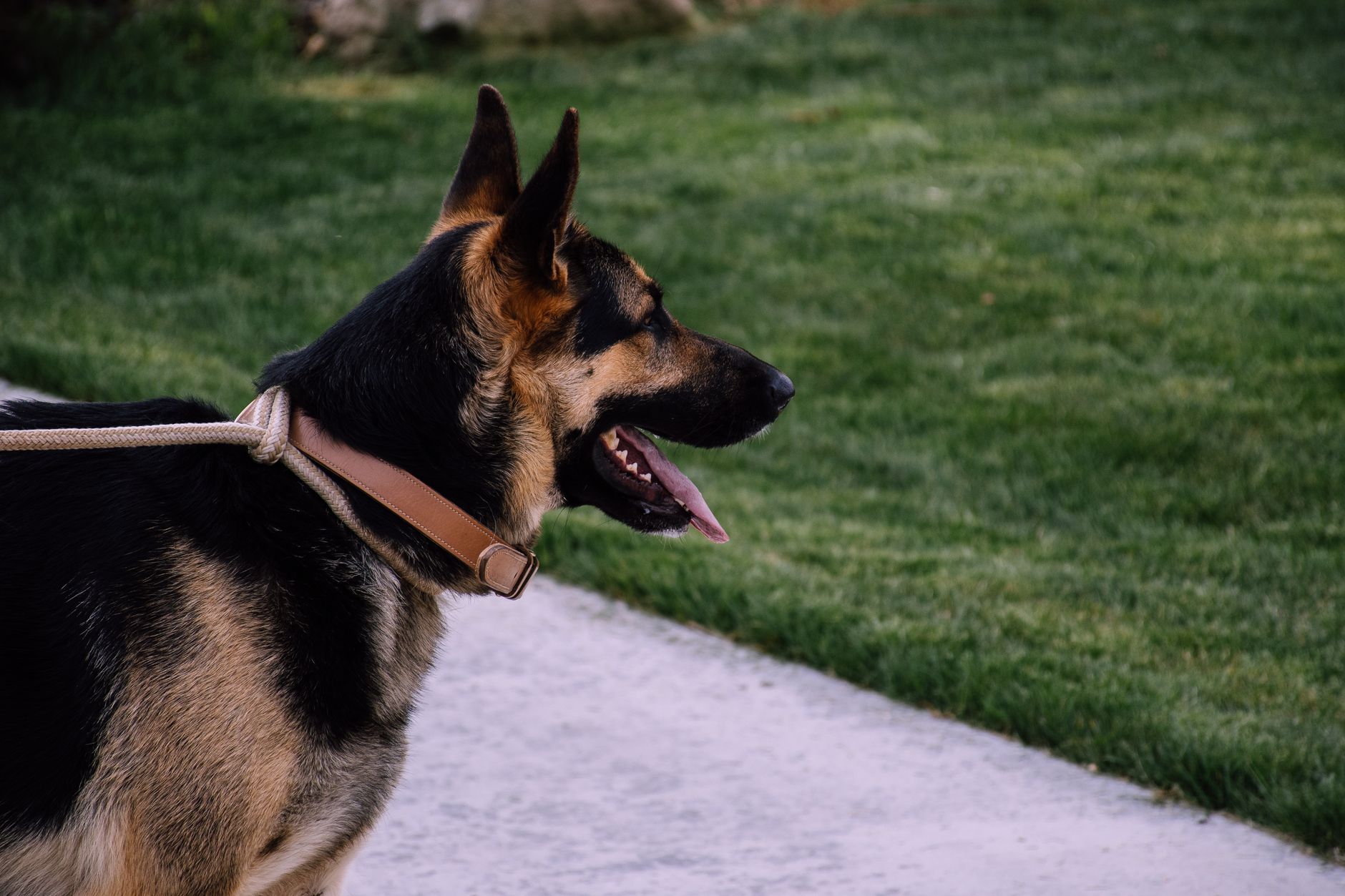
Max is a 2-year-old male German Shepherd from a working line. He weighs 82 pounds, stands 26 inches at the shoulder, and has the classic black-and-tan coat. His previous owner surrendered him at 10 months because he “couldn’t handle walks.” When I adopted him, I didn’t realize the full scope of the problem. On our first neighborhood walk, he spotted a golden retriever 100 feet away and immediately went stiff, ears forward, tail high. Within three seconds he was barking and pulling so hard the leash slipped out of my hand.
I documented everything: trigger type, distance, duration of reaction, and my response. After two weeks, the pattern was clear. Dogs approaching from the front were the worst. Bicycles passing from behind caused a spin-and-lunge. I needed a structured plan with measurable goals. My first goal: get Max to sit and look at me within 20 feet of a trigger. That took six weeks of daily 20-minute sessions.
Setting Up for Success: Equipment Choices
Equipment can make or break reactivity training. Reviewers tested three harnesses and two leashes before finding what worked. The Ruffwear Front Range harness (size Large/XL, chest girth 32–42 inches, $59.95) has a front clip that redirects pulling without choking. The PetSafe Easy Walk (size Large, chest 28–35 inches, $34.99) uses a martingale loop over the chest—effective but can restrict shoulder movement if too tight. I also tried the Gentle Leader head halter (size Large, neck 21–25 inches, $24.99). It gave me excellent control but Max hated it; he pawed at his face constantly. I switched back to the Front Range and paired it with a 6-foot leather leash (Tuff Mutt, 3/4-inch wide, $28.99) that gave me a solid grip without burning my hands.
Crate training also played a role. Max’s crate is a Midwest iCrate 42-inch model (42L x 28W x 31H inches, $89.99). The bar spacing is 1.5 inches—safe for GSDs (spacing under 2 inches prevents escapes). Weight capacity is 110 pounds, well above Max’s weight. The crate became his safe space, which helped lower his baseline anxiety. I noticed his reactivity was worse on days he didn’t get crate downtime.
The Training Protocol: Counter-Conditioning and Desensitization
I used a system called LAT (Look At That), popularized by Leslie McDevitt. The core idea: when your dog sees a trigger, mark the moment they notice it (before they react) and reward. I used a clicker and high-value treats—boiled chicken breast, cut into pea-sized pieces. A Ruffwear Trail Runner treat pouch (5 x 3 x 2 inches, $19.95) clipped to my belt kept treats accessible. I started at 60 feet from a quiet street where I knew a dog would pass. Every time Max glanced at the dog without barking, I clicked and tossed a treat behind him to break his focus.
The time commitment was 15–20 minutes per day, five days a week. Cost of treats: about $8 per week for chicken and cheese. After three weeks, I could work at 40 feet. After two months, we passed within 15 feet of a calm dog with only a brief stare. The key was never pushing past his threshold—if he reacted, I moved farther away and tried again. I also added obedience drills: “sit,” “down,” and “touch” at increasing distances from triggers. That built his focus on me instead of the environment.
Addressing Obedience: The Foundation
Reliable obedience is the backbone of reactivity management. I focused on three commands: “watch me,” “heel,” and “leave it.” For “heel,” I used a Dogtra 1900S e-collar (range 3/4 mile, $229.99) on the lowest stimulation level (level 2 out of 127). The collar has a 1-inch receiver width and weighs 3.5 ounces. I paired it with positive reinforcement—every correct heel position earned a treat. The e-collar was only used as a backup for safety, not as a primary training tool. Many trainers argue against e-collars for reactivity, but in my case, it gave me a way to redirect Max during an explosive reaction without escalating his arousal.
I also invested in a professional trainer—three private sessions at $85 each. She helped me read Max’s body language (lip licking, whale eye, stiff tail) and time my corrections. The total cost for training and equipment: about $450. That’s a fraction of what a board-and-train program costs (typically $1,500–3,000), and I learned skills I still use daily.
Maintenance and Ongoing Care
German Shepherds require significant ongoing care. Vet costs: annual exam ($75), DHPP booster ($35), rabies ($25), heartworm test ($45), and preventives ($12/month for Heartgard, $18/month for NexGard). Total annual vet cost: roughly $450. Grooming: I brush Max three times a week with a Furminator deShedding tool (large, $29.99). During shedding season (spring and fall), I brush daily and vacuum twice a week. A Roomba (i3 model, $299) runs every morning to keep fur under control.
Exercise needs: GSDs need 60–90 minutes of active exercise daily. I split that into a 45-minute morning walk (with training) and a 30-minute afternoon fetch or flirt pole session. Without enough exercise, reactivity spikes. I also use mental stimulation: puzzle toys (Nina Ottosson Dog Tornado, $24.99) and nose work (snuffle mat, $15.99). The total daily time commitment for Max is about 2 hours—training, exercise, and grooming.
Results and Long-Term Management
After six months of consistent work, Max’s threshold distance dropped from 50 feet to about 6 feet for calm dogs. He can now walk past a barking dog on the other side of the street with only a glance. Bicycles still get a brief alert, but he recovers quickly. The key is never letting him rehearse the reactive behavior—if I see a trigger, I increase distance or do a 180 turn before he hits threshold. Management is lifelong. I still carry high-value treats on every walk, and I avoid off-leash dog parks (too unpredictable).
The cost of this transformation: about $500 in equipment and training, plus $50/month in ongoing treats and preventives. The payoff is a dog I can take to outdoor cafés, hiking trails, and even pet stores. Not every GSD will reach that level, but with the right protocol, most can improve dramatically.
Three takeaways: (1) Measure your dog’s threshold distance and never exceed it during training. (2) Invest in a front-clip harness and high-value treats—they’re worth every penny. (3) Consistency beats intensity: 15 minutes daily for six months beats 2 hours once a week. If you’re dealing with a reactive GSD, start with a Ruffwear Front Range harness and a bag of boiled chicken. It’s the single best first step you can take.
Frequently Asked Questions
How long does it take to fix leash reactivity in a German Shepherd?
Most GSDs show noticeable improvement within 8–12 weeks of consistent counter-conditioning. Full reliability often takes 6–12 months. The timeline depends on the dog’s age, history, and how strictly you manage triggers. Max was at 80% improvement after six months. Older dogs or those with a long history of rehearsed reactivity may take longer—sometimes 18 months or more.
What is the best harness for a reactive German Shepherd?
The Ruffwear Front Range is my top pick for most GSDs. It has a front clip that discourages pulling without restricting movement, and it fits deep-chested dogs well. The PetSafe Easy Walk is a budget alternative at $34.99 but can rub under the armpits if worn too long. Avoid back-clip harnesses for reactivity—they make pulling easier. Measure your dog’s chest girth (Max is 36 inches) before ordering.
Should I use an e-collar for leash reactivity?
Only if you’re experienced with balanced training and work with a professional. E-collars can suppress the outward signs of reactivity without addressing the underlying fear, making the problem worse. I used a Dogtra 1900S on the lowest level as a safety backup, but 90% of my training was positive reinforcement. For most owners, I recommend starting with a front-clip harness and a clicker. If you do use an e-collar, invest in a trainer who specializes in reactivity.
How much exercise does a German Shepherd need to prevent reactivity?
German Shepherds need at least 60 minutes of structured exercise daily, plus 20–30 minutes of mental stimulation. Without enough physical and mental outlet, pent-up energy often turns into reactivity. Max gets 45 minutes of walking (with training) and 30 minutes of fetch or flirt pole. I also do short training sessions (10 minutes) scattered throughout the day. Tired dogs are calmer dogs.
Related from our network
- How Three Women Used Deer Symbolism to Overcome Anxiety: A Case Study (animalsouldecoder)
- Organizing a Chaotic Home in 6 Weeks: Before-and-After Case Study With Three Kids (familyflourish)
- From Feeling Lost to Finding Purpose: Phoenix Symbolism Case Study (animalsouldecoder)
🐾 Our Top Pick
Editor’s Pick: A practical dog training book for mastering reactive leash walking.
For the Love of Your Pet
Care guides, breed insights, and gentle advice for happier pets.