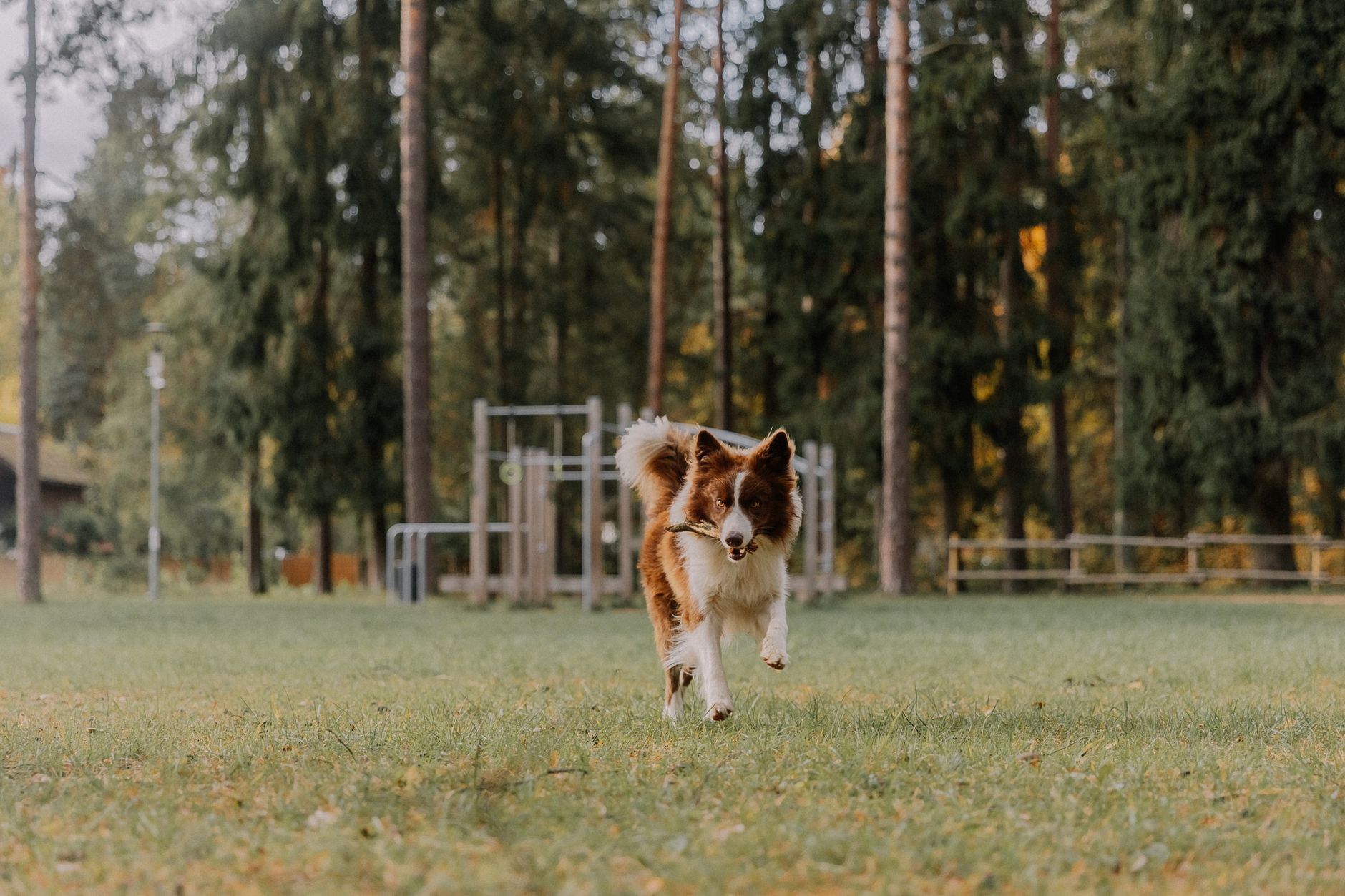
We have all heard the exhausted owner claim that “a tired dog is a good dog,” but relying on this maxim alone is a fast track to orthopedic disaster, especially if you are measuring tiredness by panting alone. I have watched too many well-meaning owners run their six-month-old Labrador Retrievers alongside bicycles until the puppy collapses, assuming exhaustion equals satisfaction. The reality is that a dog’s physical requirement is not a flat number; it is a complex calculation based on breed genetics, age, respiratory efficiency, and joint development. While a Border Collie might be content to hike 15 miles and still herd the cat when you get home, a French Bulldog can suffer life-threatening heat stroke after a 20-minute power walk in 75-degree weather. Understanding the specific biological needs of your dog’s breed group is not just about preventing boredom; it is about preventing expensive veterinary bills for ruptured cruciate ligaments and early-onset arthritis.
Understanding the “Five-Minute Rule” for Puppies
Before you look at your breed’s specific adult requirements, you must master the timeline for puppies. Growth plates in a dog’s legs do not close until they are between 12 to 18 months old, depending on the breed size. Until these plates close, repetitive impact on hard pavement can cause permanent deformities like hip dysplasia or elbow dysplasia. The “Five-Minute Rule” is the gold standard I use with all my charges: you should exercise your puppy for 5 minutes twice a day for every month of their age. For example, a 4-month-old puppy needs 20 minutes of structured exercise, twice a day. This excludes free play in the yard, which the puppy can regulate themselves.
You need the right gear to enforce this without damaging their necks. I recommend the 2 Hounds Design Freedom No-Pull Harness. It is my go-to because it features a patented control loop on the back that tightens slightly when the dog pulls, correcting them without choking. The harness has two connection points—the front for heavy pullers and the back for casual walking—and comes in sizes ranging from XXS fitting a 10lb chest to XL fitting a 45lb+ chest, priced around $45 to $55. It uses a velvet-lined strap to prevent chafing behind the front legs, a common issue with cheaper brands. Unlike a collar, this distributes pressure across the chest, protecting the developing trachea and neck vertebrae of high-energy breeds like Boxers or Pugs.
The High-Octane Needs of Herding and Sporting Breeds
If you share your home with a Belgian Malinois, Australian Shepherd, or any of the Retrievers, “walking” is merely a warmup. These breeds were genetically engineered to work 8 to 12-hour shifts in harsh environments. A casual 30-minute stroll around the block will often leave these dogs vibrating with pent-up energy, which usually manifests as dismantling your drywall. For these dogs, we are looking at a minimum of 60 to 90 minutes of vigorous exercise daily, split into two sessions if possible. But distance isn’t the only metric; you need to engage their brains.
For high-drive breeds, I rely heavily on Outward Hound’s Nina Ottosson Puzzle Toys for mental fatigue. Specifically, the “Dog Brick” Level 2 Interactive Puzzle ($25-$30 retail). It forces the dog to slide compartments and flip lids to retrieve treats. Measurements are roughly 12 inches by 9 inches, and it is designed for dogs of all sizes. Using this for 15 minutes is often more tiring for a Border Collie than a 3-mile run. Structured fetch is also non-negotiable, and for this, nothing beats the Chuckit! Pro Launcher. It extends your reach by 24 inches, allowing you to throw a standard 2.5-inch ball significantly further without shoulder fatigue. If you are using the Chuckit! Ultra Ball, which comes in Medium (2.5″) or Large (3″), you are looking at a durable, rubber ball that floats and is easy to clean, costing roughly $8 to $10 for a two-pack.
The Brachycephalic Challenge: Bulldogs and Pugs
Pugs, French Bulldogs, Boston Terriers, and Cavalier King Charles Spaniels fall into the brachycephalic category, meaning they have short snouts and compromised airways. Assuming these breeds can keep up with a hiking group is dangerous. Their exercise needs are actually quite low compared to the sporting groups—generally 30 minutes of total walking per day, split into shorter 15-minute blocks. When I walk these breeds, I strictly monitor the temperature. If it is above 70 degrees Fahrenheit (21 degrees Celsius) with high humidity, a Pug should merely be doing bathroom breaks in the shade.
Because these dogs overheat so quickly, the type of collar is critical. I strongly advise against collars for brachycephalic breeds; use a harness exclusively to avoid airway restriction. The Ruffwear Front Range All-Day Harness is my top pick here. It costs around $55 and has padding across the chest and belly, which is vital for dogs that can overheat. Size Small typically fits a girth of 18-24 inches and a neck of 14-20 inches. However, if you are looking for a budget alternative that offers a handle for lifting them out of heat danger, the Kurgo Tru-Fit Smart Harness ($20-$30) is a reliable option. Its front loop significantly reduces pulling, saving the dog’s energy for breathing. Always carry water; the Chewy Granbury Stainless Steel Water Bottle (20 oz, $12) is a staple in my bag for Frenchie walks, allowing for quick hydration without the need for a bowl.
Endurance over Speed: The Hound and Scent Group
Bloodhounds, Beagles, and Coonhounds present a different challenge: they have incredible stamina but are easily distracted by scent. A Beagle does not need to sprint; it needs to wander. Their daily requirement is about 60 to 90 minutes, but it needs to be “sniffing time.” If you force them to heel and look at you for an hour, you have frustrated their primary instinct. The best way to exercise a scent hound is not on a tight leash but on a long line. I use Long Dog Leashes Biothane Leads, specifically the 15-foot or 30-foot varieties in 1/2-inch width. Biothane is a polyurethane-coated webbing that is waterproof, stink-proof, and easy to clean—unlike leather or nylon which gets soggy and heavy. A 30-foot biothane line typically weighs less than 8 ounces and costs between $25 and $35, durable enough to withstand the pulling force of a 60lb Coonhound.
When you give them this freedom, you must be prepared to lose sight of them, or worse, lose the dog entirely if they drop a leash. This is why I never exercise scent hounds without a GPS tracker. The Tractive GPS Dog Tracker 4 (pricing starts at $50 plus subscription) creates a “Virtual Fence.” When my Beagle crosses the boundary, I get an alert on my phone instantly. It weighs roughly 35 grams, attaches to any collar, and has a battery life of about 5 to 7 days. Compare this to the Fi Series 3 Smart Collar (approx. $149). The Fi is excellent because it uses LTE-M cellular technology, reducing dead zones, but it is heavier and bulkier. For a lightweight Beagle, the Tractive is usually less intrusive, but for a larger Wolfhound, the Fi’s rugged build and 3-month battery life make it the superior long-term investment.
Giant Breeds: Managing Mass and Joint Health
Great Danes, Mastiffs, and Saint Bernans are deceptive. Because they look massive and calm, people assume they are lazy. While they have lower energy levels than a terrier, requiring about 45 to 60 minutes of exercise daily, the impact of that exercise is magnified by their weight. A Great Dane weighing 150 lbs puts tremendous stress on joints with every hop. With giant breeds, you must avoid “heavy play.” I strictly discourage jumping for frisbees or sprinting on slick floors. The exercise must be steady, low-impact walking, ideally on grass or softer trails.
One of the most dangerous risks for giant breeds is Gastric Dilatation-Volvulus (GDV), or bloat. You must never exercise a giant breed within 2 hours of eating a meal. To manage this, I feed my dogs inside specialized slow-feeder bowls to force them to eat slower, reducing air intake. The Outward Hound Fun Feeder Slo-Bowl (Large/Giant size, ~$18) has ridges that force the dog to navigate around to get the kibble. The measurements are roughly 12 inches wide and holds up to 6 cups of food. It creates a mess, but it is a necessary cleanup
Related from our network
- Screen Time Rules by Age: Evidence-Based (familyflourish)
- Why Your Fitness Tracker Calories Burned May Be Wrong (pulsegearreviews)
- AI Data Analysis Tools for Business: 10 Essential Platforms Compared (2026) (aiinactionhub)
For the Love of Your Pet
Care guides, breed insights, and gentle advice for happier pets.