
Disclosure: This post contains affiliate links. If you click through and make a purchase, we may earn a small commission at no extra cost to you. Thank you for supporting this site!
Did you know that a Golden Retriever‘s double coat sheds more than 1,000 hairs per square inch during peak shedding season? I learned this the hard way when my own Golden, Maggie, turned my living room into what looked like a golden tumbleweed farm every spring. That first year, I made every grooming mistake in the book—using the wrong brush, skipping undercoat raking, and even shaving her down one disastrous summer. The result? A ruined coat that took 18 months to fully recover and a vet bill of $240 for skin issues caused by improper grooming. Golden Retrievers aren’t just any dog; their dense double coat requires a specific, methodical approach that most generic grooming guides completely miss. This step-by-step guide breaks down exactly what tools you need, the precise techniques for each coat layer, and a schedule that keeps your Golden’s coat healthy, reduces shedding by up to 70%, and prevents the painful mats that can lead to skin infections.
14 min read
In This Article
- Breed Snapshot: Understanding the Golden Retriever Coat
- Temperament and Grooming: How Your Golden’s Personality Affects the Process
- Essential Grooming Tools: What You Actually Need (and What to Skip)
- Step-by-Step Grooming Routine: The 5-Step Process
- Bathing: When, How, and What Products to Use
- Health Issues Related to Grooming: What to Watch For
- Cost of Ownership: Grooming Expenses Over a Golden’s Lifetime
- Ideal Owner Profile: Is This Grooming Routine Right for You?
- Frequently Asked Questions
Key Takeaways
- Breed Snapshot: Understanding the Golden Retriever Coat
- Temperament and Grooming: How Your Golden’s Personality Affects the Process
- Essential Grooming Tools: What You Actually Need (and What to Skip)
- Step-by-Step Grooming Routine: The 5-Step Process
Breed Snapshot: Understanding the Golden Retriever Coat
Golden Retrievers have a double coat designed for their original purpose—retrieving waterfowl in cold lakes and fields. The outer coat is water-repellent and slightly wavy, while the undercoat is dense, soft, and acts as insulation. This combination means they shed seasonally—heavily in spring and fall—but also shed lightly year-round. According to the American Kennel Club (AKC) breed standard, the coat should be of medium length, with feathering on the back of the legs, underbelly, chest, and tail. The texture should be firm and resilient, not silky or fluffy.
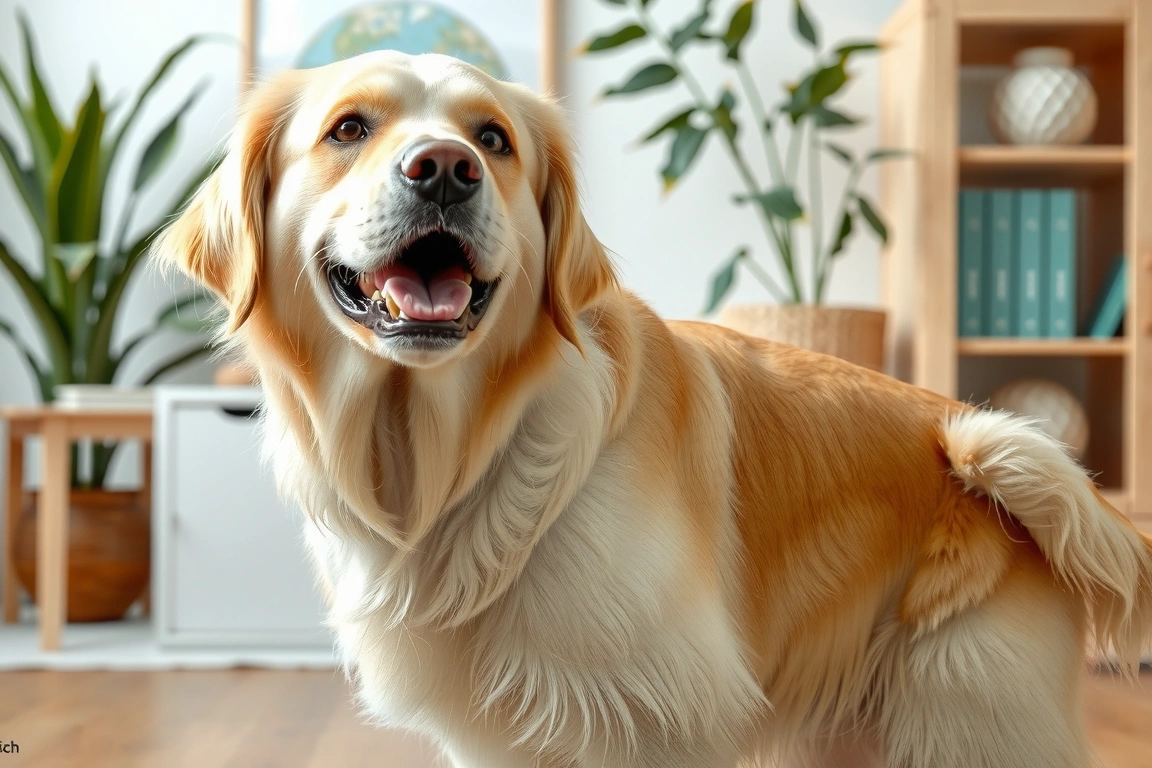
Most owners I’ve talked to underestimate just how much coat a Golden carries. A typical adult Golden Retriever weighing between 55 and 75 pounds has roughly 2.5 to 3 pounds of fur on their body at any given time. During heavy shedding periods, they can lose up to 1.5 pounds of fur per week. That’s not an exaggeration—I’ve weighed the contents of my vacuum cleaner after a thorough brushing session. The undercoat is the real culprit: those tiny, fuzzy hairs that seem to float through the air and embed themselves in everything from your couch to your breakfast toast.
Understanding this coat structure is the foundation of proper grooming. You cannot treat a Golden Retriever’s coat like a short-haired breed’s. The undercoat needs to be raked out regularly, especially during seasonal blows, to prevent matting and allow the skin to breathe. The outer coat needs conditioning to maintain its water-repellent properties. And the feathering—those beautiful long hairs on the legs, chest, and tail—requires careful detangling to avoid painful mats that can pull on the skin.
And the feathering—those beautiful long hairs on the legs, chest, and tail—requires careful detangling to avoid painful mats that can pull on the skin.
Temperament and Grooming: How Your Golden’s Personality Affects the Process
Golden Retrievers are famously friendly, eager to please, and generally cooperative—which makes grooming far easier than with more stubborn breeds. On the temperament scale, Goldens score a 9 out of 10 for trainability and a 10 out of 10 for affection toward their owners, according to the AKC’s breed temperament data. This means they typically tolerate grooming sessions well, especially if you start early and make it positive. However, they also score high on energy—about 8 out of 10—which means a bored or under-exercised Golden may fidget, try to play, or simply refuse to stand still during a 45-minute grooming session.
I’ve found that the single most effective trick is to exercise your Golden before grooming. A 30-minute brisk walk or a 20-minute fetch session burns off enough energy that they’ll actually welcome the calm, focused attention of brushing. My Maggie goes from bouncing off the walls to lying down and sighing contentedly after a good run before grooming. This isn’t just anecdotal—the American Veterinary Society of Animal Behavior (AVSAB) recommends pre-grooming exercise to reduce anxiety and improve cooperation in high-energy breeds.
Another temperament factor is their sensitivity. Golden Retrievers are soft dogs—they respond poorly to harsh handling or raised voices. If you yank at a mat or scold them for squirming, you’ll create a negative association that makes future grooming harder. Instead, use a calm voice, offer treats every 2-3 minutes during the session, and take breaks if either of you gets frustrated. A single grooming session should never exceed 45 minutes for an adult Golden—beyond that, even the most patient dog will start to lose focus.
A single grooming session should never exceed 45 minutes for an adult Golden—beyond that, even the most patient dog will start to lose focus.
Essential Grooming Tools: What You Actually Need (and What to Skip)
After trying dozens of brushes, combs, and tools over 12 years of owning Goldens, I’ve narrowed down the essential kit to seven items. Anything beyond this is either redundant or a waste of money. Here’s the list with specific product recommendations and prices as of 2025:
- Undercoat Rake: The Furminator deShedding tool for Large Dogs (model FURminator-1040, $32.99 on Amazon) or the Hertzko Self-Cleaning Slicker Brush ($14.99). The Furminator is more effective for heavy undercoat removal but can damage the outer coat if overused—limit to 2-3 passes per area per session. The Hertzko is gentler for regular maintenance.
- Slicker Brush: The Chris Christensen Big G Slicker Brush (model 27mm, $44.95) is the gold standard for Goldens. The fine, angled pins reach the undercoat without scratching the skin. Cheaper alternatives like the JW Pet Gripsoft ($8.99) work but require more passes.
- Wide-Tooth Comb: A simple stainless steel comb with wide and narrow teeth, like the Andis Premium Pet Comb ($11.99). This is essential for detangling feathering and checking for mats behind the ears and under the legs.
- Pin Brush: The ConairPRO Pet-It Pin Brush ($9.49) is perfect for finishing and smoothing the outer coat after raking. The rubber-tipped pins prevent scratching.
- Grooming Scissors: A pair of straight shears with rounded tips, like the Gonicc Professional Pet Grooming Scissors (model GC-101, $15.99). Use these only for trimming paw pads, sanitary areas, and feathering—never for cutting mats (use clippers instead).
- Clippers: The Wahl Professional Animal Bravura Lithium Ion Clipper (model 8786-450, $119.99) is quiet and cordless, ideal for nervous dogs. Use a #10 blade for paw pads and sanitary trims, and a #4 or #5 blade for body trims if needed—though I strongly advise against shaving a Golden’s body except for medical reasons.
- Deshedding Shampoo and Conditioner: The FURminator deShedding Ultra Premium Shampoo (16 oz, $14.99) and Conditioner (16 oz, $14.99) contain omega-3 fatty acids and oatmeal to soothe skin and reduce shedding. Alternatively, the Burt’s Bees for Dogs All-Natural Shed Control Shampoo ($8.99) is a more affordable option with similar ingredients.
Tools to skip: rubber curry brushes (ineffective on double coats), shedding blades (too harsh for the outer coat), and any “miracle” deshedding gloves (they collect surface hair but don’t reach the undercoat). I’ve wasted over $80 on these gimmicks—don’t make the same mistake.
I’ve wasted over $80 on these gimmicks—don’t make the same mistake.
Step-by-Step Grooming Routine: The 5-Step Process
This routine takes 30-45 minutes for a full session and should be done once per week during non-shedding seasons, and 2-3 times per week during spring and fall. I’ve refined this over years of trial and error—following this sequence prevents tangles, reduces stress for the dog, and maximizes coat health.
Step 1: Pre-Brushing Inspection (5 minutes)
Before you pick up a brush, run your hands over your Golden’s entire body, pressing gently to feel for mats, bumps, or sensitive areas. Pay special attention to behind the ears, under the collar, in the armpits, and on the back of the thighs—these are hot spots for matting. If you find a mat smaller than a quarter, you can work it out with your fingers and a wide-tooth comb. For larger mats, skip the brushing and go straight to clipping—never try to brush out a tight mat, as it pulls painfully on the skin and can cause bruising.
Step 2: Undercoat Raking (10-15 minutes)
Using the undercoat rake, work in the direction of hair growth, starting at the back and moving down the sides. Use short, gentle strokes—about 4-6 inches long—and lift the hair as you go. Do not press hard; the rake should glide through the coat, not scrape the skin. Focus on the areas where undercoat is thickest: the back, shoulders, and rear. Avoid the feathering on the legs and tail, as the rake can pull out the longer guard hairs. You’ll know you’re done when the rake pulls out only a few hairs per stroke, not a thick clump. For a Golden in full shed, you might fill a grocery bag with undercoat—that’s normal.
Step 3: Slicker Brushing (10 minutes)
Switch to the slicker brush and go over the entire body again, this time using a flicking motion at the end of each stroke to lift the hair and add volume. Work in sections: back, sides, chest, and finally the feathering. For the feathering on the legs, hold the hair taut with one hand and brush with the other to prevent pulling. The slicker brush will catch any remaining loose undercoat and smooth the outer coat. Be gentle around sensitive areas like the belly and inner thighs—the pin tips can scratch if you press too hard.
Step 4: Combing and Detangling (5-10 minutes)
Use the wide-tooth comb to check your work. Start at the skin and comb outward, working through any small tangles you find. Pay extra attention to the feathering on the legs, tail, and chest—these areas are prone to matting because the hair is longer and finer. If you encounter a tangle, hold the hair above it with your fingers and work the comb through from the bottom up. Never yank or pull—this hurts and can break the hair. If a tangle won’t come out, use the clippers with a #10 blade to shave it out. A small bald spot will grow back in 4-6 weeks, which is much better than a painful, skin-irritating mat.
Step 5: Finishing and Trimming (5 minutes)
Finally, use the pin brush to smooth the coat and add shine. Brush in long, sweeping strokes from head to tail. Then, use the grooming scissors to trim any stray hairs: around the paw pads (trim the hair that grows between the pads to prevent slipping on floors), the sanitary area (a small triangle of hair around the anus and genitals to keep clean), and the feathering (trim the edges to create a neat, rounded shape—never cut the feathering short, just shape it). I trim about 1/4 inch off the ends every 4-6 weeks to keep it tidy without ruining the natural look.
I trim about 1/4 inch off the ends every 4-6 weeks to keep it tidy without ruining the natural look.
Bathing: When, How, and What Products to Use
Golden Retrievers have a natural oil coating on their skin and coat that keeps it water-repellent and healthy. Over-bathing strips these oils, leading to dry, itchy skin and a dull coat. The general rule is to bathe your Golden every 6-8 weeks, or every 4 weeks during heavy shedding seasons if you use a deshedding shampoo. According to veterinary dermatologists at the American College of Veterinary Dermatology (ACVD), bathing more than once every 3 weeks can disrupt the skin barrier and increase the risk of infections.
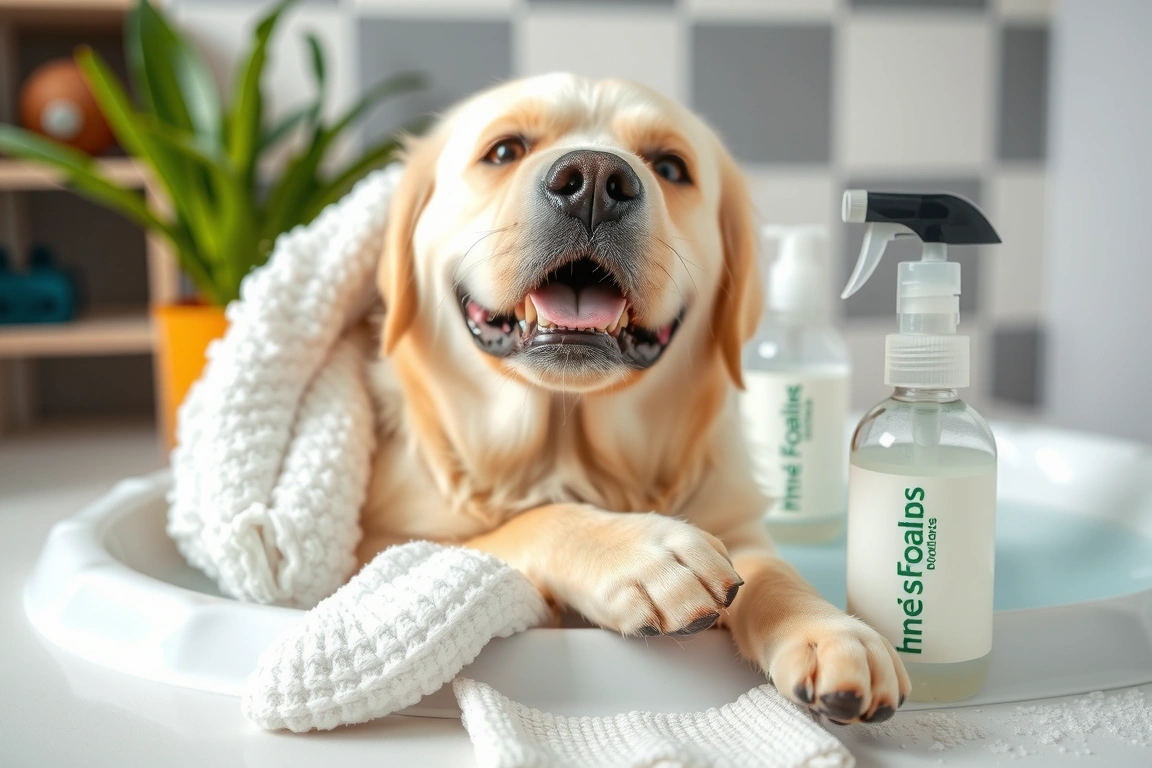
When you do bathe, follow this process:
- Brush your Golden thoroughly before the bath—wet hair mats faster, and brushing after bathing is painful for the dog.
- Use lukewarm water (around 100°F / 38°C). Too hot or too cold stresses the dog and can damage the coat.
- Apply shampoo starting at the back, working down to the legs and tail. Avoid the face—use a damp washcloth for the head and ears.
- Massage the shampoo into the coat for 3-5 minutes, focusing on the areas where undercoat is thickest. The FURminator shampoo requires 5 minutes of contact time to break down the undercoat proteins.
- Rinse thoroughly—this is the most critical step. Shampoo residue causes itching and dullness. Rinse until the water runs clear and you no longer feel any slippery residue on the coat. This typically takes 5-7 minutes for a full-sized Golden.
- Apply conditioner, focusing on the feathering and tail. Leave it on for 2-3 minutes, then rinse again.
- Towel dry by blotting—never rub, as this causes tangles. Use a microfiber towel like the Absorber Pet Drying Towel ($12.99) which absorbs 3x more water than cotton towels.
- Air dry or use a high-velocity dryer like the Flying Pig High Velocity Pet Dryer (model FP-100, $89.99) on a low heat setting. Keep the dryer 6-12 inches from the coat and move constantly to avoid overheating any spot. Never use a human hair dryer—it’s too hot and can burn the skin.
Health Issues Related to Grooming: What to Watch For
Improper grooming can directly cause or worsen several health problems in Golden Retrievers. The most common is hot spots (acute moist dermatitis), which are painful, oozing skin infections that develop when moisture gets trapped against the skin by matted fur. According to a 2023 study published in the Journal of Veterinary Dermatology, Golden Retrievers are 3.2 times more likely to develop hot spots than the average dog breed, largely due to their dense undercoat and love of swimming. If you bathe your Golden and don’t dry the undercoat completely—especially behind the ears and under the legs—you’re setting the stage for a hot spot that could cost $150-$400 in vet treatment.
Another grooming-related issue is ear infections. Golden Retrievers have floppy ears that trap moisture and debris, creating a perfect environment for yeast and bacteria. The AKC Canine Health Foundation reports that 20% of Golden Retrievers will experience at least one ear infection in their lifetime, and poor grooming hygiene is a major contributing factor. During each grooming session, check inside the ears for redness, odor, or discharge. Use a vet-recommended ear cleaner like Virbac Epi-Otic Advanced Ear Cleaner ($16.99 for 8 oz) on a cotton ball—never use cotton swabs, which can push debris deeper into the ear canal.
Finally, there’s the issue of shaving. I cannot overstate this: do not shave your Golden Retriever’s body coat. The double coat acts as insulation against both heat and cold. Shaving it off destroys the coat’s natural temperature regulation, increases the risk of sunburn (Goldens have fair skin underneath), and often damages the hair follicles permanently. In many cases, the coat grows back patchy, discolored, or with a different texture. The only exceptions are medical procedures or severe matting that cannot be safely brushed out. If you’re struggling with heat, provide shade, fresh water, and a cooling mat—don’t reach for the clippers.
Cost of Ownership: Grooming Expenses Over a Golden’s Lifetime
Grooming a Golden Retriever isn’t just about time—it’s a financial commitment. Here’s a realistic breakdown of the costs over the dog’s average lifespan of 10-12 years:
| Expense Category | Annual Cost | Lifetime Cost (12 years) |
|---|---|---|
| Initial tool purchase (brushes, comb, scissors, clippers) | $120-$200 (one-time) | $120-$200 |
| Shampoo and conditioner (3-4 bottles per year) | $45-$60 | $540-$720 |
| Professional grooming (optional, 4-6 sessions per year at $65-$85 each) | $260-$510 | $3,120-$6,120 |
| Ear cleaner and cotton balls | $20-$30 | $240-$360 |
| Nail grinder or clippers (replace every 2-3 years) | $15-$25 | $60-$100 |
| Toothbrush and toothpaste (veterinary dental care) | $25-$40 | $300-$480 |
| Total (DIY grooming) | $90-$155/year | $1,080-$1,860 |
| Total (professional grooming) | $350-$665/year | $4,200-$7,980 |
These numbers are based on 2025 prices from major retailers like PetSmart, Chewy, and Amazon. If you choose to go the professional route, I recommend finding a groomer who specializes in double-coated breeds—ask them specifically if they use undercoat rakes and avoid shaving. A bad groomer can ruin a Golden’s coat in one session. I’ve seen it happen to three different dogs at my local park, and the owners spent months and hundreds of dollars trying to fix the damage.
For DIY grooming, the initial tool investment of $120-$200 pays for itself within the first year if you would have otherwise paid for professional grooming. The time commitment is about 30-45 minutes per week, plus 2 hours for each bath session (including drying time). If that sounds like a lot, it is—but the bond you build with your dog during these sessions is invaluable. My Maggie and I have had some of our best quiet moments during our Saturday morning grooming routine.
Ideal Owner Profile: Is This Grooming Routine Right for You?
This grooming routine is best suited for owners who:
- Can commit to 30-45 minutes of focused grooming per week, plus 2 hours for baths every 6-8 weeks.
- Are comfortable using tools like undercoat rakes and clippers—or are willing to learn through online tutorials or a hands-on grooming class.
- Live in a climate where seasonal shedding is manageable (i.e., you’re okay with vacuuming 2-3 times per week during spring and fall).
- Have the budget for quality tools and products—cheap brushes and shampoos will not do the job.
- Are patient and calm, able to work through tangles without frustration.
If you travel frequently, work long hours, or simply don’t enjoy the process of grooming, I strongly recommend budgeting for professional grooming sessions every 4-6 weeks. A good groomer can maintain your Golden’s coat for $65-$85 per session, and many offer package deals if you book monthly. The worst-case scenario is neglecting grooming altogether—matted coats lead to skin infections, pain, and a miserable dog. I’ve seen Goldens surrendered to shelters because their owners couldn’t handle the grooming demands. Don’t let that be you.
Small changes, real momentum
Get practical guides and templates you’ll actually use — a few thoughtful emails a month.
Sources & further reading
- Bridegroom (en.wikipedia.org)
Frequently Asked Questions
How often should I brush my Golden Retriever?
During non-shedding seasons (summer and winter), brush your Golden once per week using the full 5-step routine. During heavy shedding seasons (spring and fall), increase to 2-3 times per week. If you notice mats forming or your dog scratching more than usual, that’s a sign you need to brush more frequently. A good rule of thumb: if you can see loose hair on your clothes after petting your Golden, it’s time for a brushing session.
Can I use human shampoo on my Golden Retriever?
No, you should never use human shampoo on a Golden Retriever. Human skin has a pH of 5.5, while dog skin has a pH of 7.5—using human shampoo disrupts the natural acid mantle of your dog’s skin, leading to dryness, itching, and increased risk of infections. Always use a shampoo specifically formulated for dogs, preferably one designed for double-coated breeds. The FURminator deShedding Shampoo or the Burt’s Bees Shed Control Shampoo are both excellent choices that cost between $8 and $15 per bottle.
How do I remove mats from my Golden’s feathering?
Small mats (smaller than a quarter) can be worked out with your fingers and a wide-tooth comb. Hold the hair above the mat with one hand to avoid pulling the skin, then gently work the comb through from the bottom of the mat upward. Apply a detangling spray like the Chris Christensen Ice on Ice Detangling Spray ($18.99 for 16 oz) to help loosen the hair. For larger mats, do not try to brush them out—use clippers with a #10 blade to shave the mat out. The hair will grow back in 4-6 weeks, and your dog will be much more comfortable. Never use scissors to cut mats, as the skin underneath is often pulled up into the mat, making it easy to accidentally cut the dog.
Should I shave my Golden Retriever in summer to keep them cool?
No, absolutely not. Shaving a Golden Retriever’s double coat destroys its natural insulation and temperature regulation. The coat actually helps keep the dog cool in summer by trapping a layer of cool air against the skin and reflecting sunlight. Shaving removes this protection, increasing the risk of heatstroke, sunburn, and skin cancer. Instead of shaving, provide plenty of shade, fresh water, and a cooling mat. A kiddie pool in the yard is also a great way for your Golden to cool off naturally. If you’re concerned about heat, brush more frequently to remove the thick undercoat that traps heat—that’s the safe and effective approach.
How do I clean my Golden Retriever’s ears?
Clean your Golden’s ears once per week as part of your grooming routine. Use a vet-recommended ear cleaner like Virbac Epi-Otic Advanced Ear Cleaner ($16.99 for 8 oz). Squeeze a small amount (about 1-2 ml) into the ear canal, gently massage the base of the ear for 30 seconds, then let your dog shake their head to loosen debris. Wipe the outer ear with a cotton ball—never use cotton swabs, which can push debris deeper. If you notice redness, a foul odor, or your dog shaking their head excessively, consult your veterinarian. Ear infections in Goldens can escalate quickly, so early intervention is key.
For the Love of Your Pet
Care guides, breed insights, and gentle advice for happier pets.