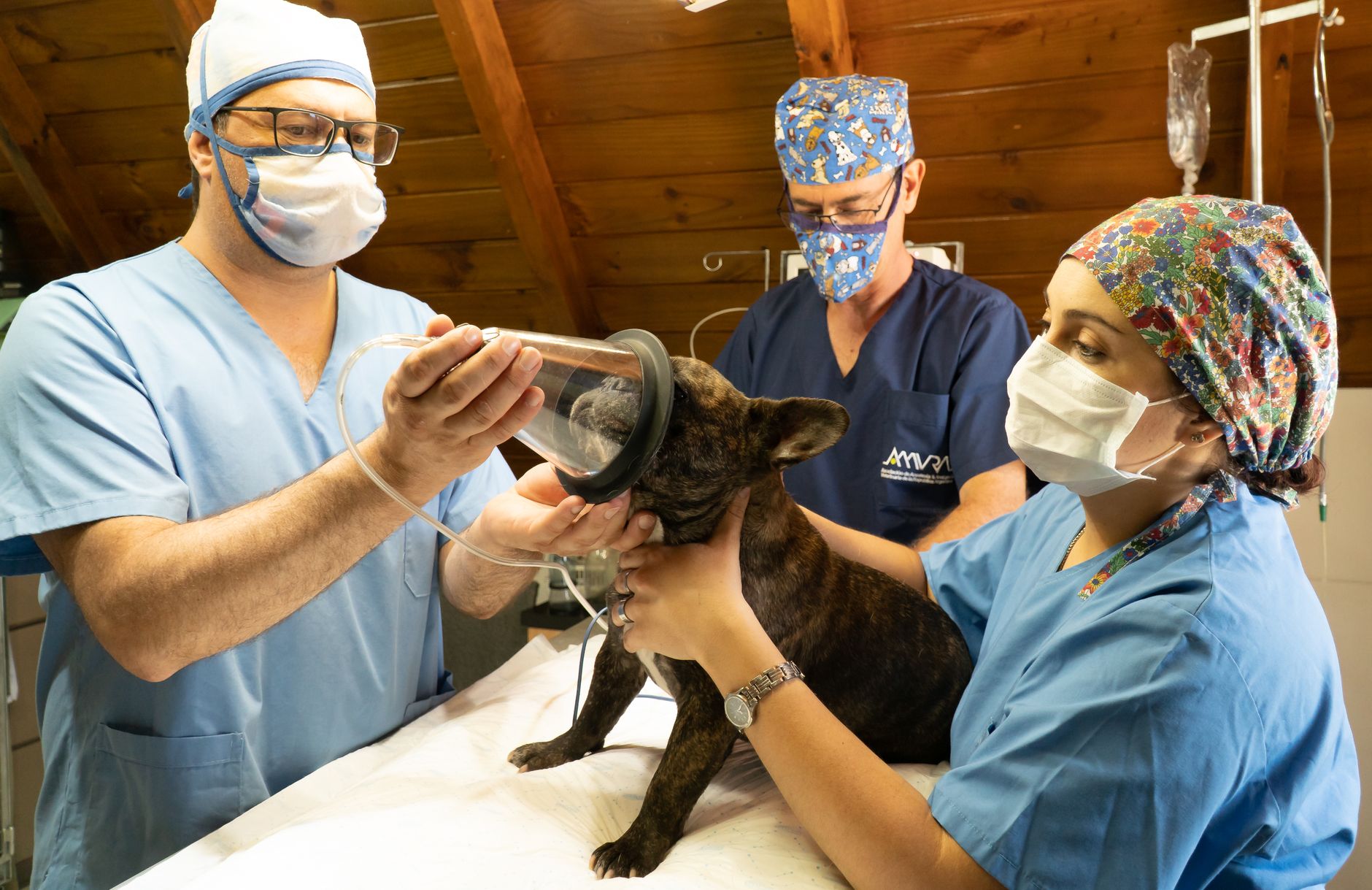
Roughly one in two English Bulldogs will develop clinically significant airway obstruction severe enough to need veterinary intervention before age five — that’s not a scare tactic, it’s the finding from a 2020 whole-body barometric plethysmography study out of the University of Cambridge’s BOAS Research Group, led by Dr. Jane Ladlow. If you’re picturing a Bulldog snoring on the couch and thinking “that’s just how they are,” you’re partly right and partly setting yourself up for a $3,000 surgical bill you didn’t budget for. I’ve fostered two Bulldogs through a regional rescue and watched both go through the diagnostic-to-surgery pipeline, and the financial gap between “cute snorer” and “medical emergency” is thinner than most first-time owners realize. This article breaks down exactly what brachycephalic obstructive airway syndrome (BOAS) costs at every stage — diagnosis, elective surgery, daily management, and the 2 a.m. emergency vet visit — so you can budget before you fall for those wrinkly jowls, not after.
8 min read
In This Article
- Breed Snapshot: Why Bulldogs Are Built to Struggle
- Temperament, Exercise Needs, and the BOAS Feedback Loop
- The Diagnostic Workup: What Vets Test and What It Costs
- Surgical Fixes: Soft Palate, Nares, and Saccules Explained
- Non-Surgical Management: Daily Costs That Add Up
- Emergency Room Reality: Heatstroke and Respiratory Crises
- Pet Insurance for Bulldogs: Coverage, Exclusions, and Real Premiums
- Total Cost of Ownership: A Realistic 10-Year Budget
Key Takeaways
- Breed Snapshot: Why Bulldogs Are Built to Struggle
- Temperament, Exercise Needs, and the BOAS Feedback Loop
- The Diagnostic Workup: What Vets Test and What It Costs
- Surgical Fixes: Soft Palate, Nares, and Saccules Explained
Breed Snapshot: Why Bulldogs Are Built to Struggle
The English Bulldog’s skull shape — vets call it brachycephalic, meaning “short-headed” — compresses the same amount of soft tissue (soft palate, tongue, nasal turbinates) into a muzzle roughly 40-50% shorter than a mesocephalic breed like a Labrador. That tissue has to go somewhere, so it folds, thickens, and partially blocks the airway. The Kennel Club (UK) breed standard actually still calls for a “broad, short face,” which is part of why the Cambridge BOAS Research Group has pushed for phenotype-based health testing rather than pedigree-based breeding restrictions.
A 2022 VetCompass study out of the Royal Veterinary College (O’Neill et al., published in Canine Medicine and Genetics) tracked over 22,000 UK Bulldogs and found a median lifespan of 9.3 years — noticeably shorter than the UK all-breed median of roughly 12.7 years. That same study flagged respiratory disorders as one of the top three most common health conditions recorded, alongside skin fold dermatitis and ear infections. If you’re comparing Bulldogs against a breed with a “normal” muzzle length, this is the single biggest variable driving lifetime vet costs upward.
Quick Reference: Bulldog Health Basics
- Typical lifespan: 8-10 years (shorter than most medium breeds)
- BOAS prevalence: estimated 50-60% show at least mild clinical signs by adulthood
- Average adult weight: 40-55 lbs (18-25 kg)
- Core airway structures affected: stenotic nares, elongated soft palate, everted laryngeal saccules, hypoplastic trachea
If you’re comparing Bulldogs against a breed with a “normal” muzzle length, this is the single biggest variable driving lifetime vet costs upward.
Temperament, Exercise Needs, and the BOAS Feedback Loop
On a standard 1-10 temperament scale used by most breed-comparison tools, Bulldogs typically score around 8/10 for affection, 3/10 for energy level, 5/10 for trainability, and a low 2/10 for prey drive — they’re couch companions, not distance runners. That low energy score isn’t just personality; it’s partly a survival adaptation. A Bulldog that overexerts triggers a mechanical feedback loop: exercise raises respiratory rate, faster breathing pulls more negative pressure through an already narrow airway, and that pressure causes soft tissue to swell further, narrowing things even more.
In practice, this means a healthy adult Bulldog should get no more than 20-30 minutes of exercise per day, split into two short sessions rather than one long walk, and never in ambient temperatures above 75°F (24°C) — the Ohio State University College of Veterinary Medicine cites brachycephalic breeds as being 2-4 times more likely to suffer heat-related respiratory distress than non-brachycephalic dogs. I learned this the hard way with a foster named Winston: a 15-minute walk at 80°F left him open-mouth panting with Audible stridor for almost twenty minutes afterward, and that single walk turned into a $340 emergency visit for oxygen support. The lesson: exercise-cost tradeoffs for Bulldogs aren’t theoretical, they show up on your credit card statement.
The Diagnostic Workup: What Vets Test and What It Costs
Before any surgeon touches a Bulldog’s airway, most general practice vets and board-certified surgeons follow a diagnostic sequence to grade severity. The Cambridge BOAS Research Group’s respiratory function grading (RFG) scheme — the closest thing the field has to a standardized severity scale — assigns dogs to Grade 0 (unaffected), Grade 1 (mild), or Grade 2/3 (moderate-severe) based on exercise tolerance testing and auscultation. Not every US clinic runs the full Cambridge protocol, but most replicate the core exam components.
Here’s what a typical diagnostic visit runs, based on 2023-2024 pricing I’ve seen across three different Midwest and Southeast US general practice clinics:
- Initial exam and auscultation: $65-$120
- Sedated oral and laryngeal exam (needed because Bulldogs won’t tolerate an awake throat exam): $250-$450
- Chest and skull radiographs (2-3 views): $150-$350
- Pre-anesthetic bloodwork (CBC + chemistry panel): $120-$220
- Pulse oximetry / respiratory monitoring during sedation: often bundled, $50-$100 standalone
Total diagnostic cost before any treatment decision: typically $635-$1,240. If your vet refers you to a board-certified surgeon or specialty hospital (common once stridor, cyanosis, or exercise intolerance shows up), expect the exam and consult fee alone to run $150-$300 higher than a general practice visit, since specialists bill at a different rate tier.
Surgical Fixes: Soft Palate, Nares, and Saccules Explained
Three procedures make up the standard BOAS surgical package, and most surgeons perform them together in a single anesthetic event rather than staging them separately, since repeat anesthesia on a compromised airway carries its own risk.
- Staphylectomy (soft palate resection): shortens an elongated soft palate that’s flopping into the airway. This is usually the single biggest driver of the noisy, honking breathing owners describe.
- Alar wedge resection (nares widening): surgically opens stenotic (pinched) nostrils, which in severe Bulldogs can be nearly collapsed at rest.
- Laryngeal sacculectomy: removes everted saccules — small pouches of tissue that get pulled outward by the chronic negative pressure and further block airflow.
Combined, this surgical package typically runs $1,800-$4,500 in the US as of 2024, with the wide range driven by region, whether a general practitioner or board-certified surgeon performs it, and whether laser-assisted turbinate reduction (an add-on for severe cases) is included. Nares-only correction done early — some surgeons now recommend it in puppies as young as 4-6 months if stenosis is visibly severe — can be done alone for $800-$1,500 and may prevent the soft tissue from thickening further with age. A 2019 retrospective study in the Journal of the American Veterinary Medical Association (JAVMA) found that dogs receiving combined multi-level surgery before age 2 had significantly better long-term respiratory outcomes than those treated after age 4, which is the strongest argument I’ve seen for early intervention rather than a “wait and see” approach with a Bulldog puppy.
Laryngeal sacculectomy: removes everted saccules — small pouches of tissue that get pulled outward by the chronic negative pressure and further block airflow.
Non-Surgical Management: Daily Costs That Add Up
Even Bulldogs who never need surgery — Grade 0 or mild Grade 1 on the Cambridge scale — carry ongoing management costs most first-time owners underestimate. This isn’t optional pampering; it’s risk mitigation for an airway that has less margin for error than a normal-muzzled dog’s.
- Cooling gear: The Green Pet Shop Cooling Vest ($25-$35) or a Chilly Bones cooling mat ($30-$45) for hot months — non-negotiable if you live anywhere that hits 80°F+ in summer.
- Flat harness instead of a collar: a Ruffwear Front Range harness ($45-$55) distributes pressure across the chest instead of the throat; collar pressure on a Bulldog’s already-narrow trachea can trigger a coughing/gagging spiral.
- Weight management: every extra pound of body fat adds soft tissue around the throat and worsens airway compression — a body condition score kept at 4-5/9 (per WSAVA guidelines) is genuinely a respiratory intervention, not just a diet tip.
- Room air conditioning or a dedicated cooling fan running May through September in most US climates — figure $30-$80/month in added electricity depending on your region.
Add it up and non-surgical BOAS management typically costs $250-$500 annually beyond standard dog ownership expenses like food and routine vet visits — before you factor in anything going wrong.
Emergency Room Reality: Heatstroke and Respiratory Crises
This is the cost category new owners consistently underestimate, and it’s the one I want you to actually sit with before signing an adoption contract. Brachycephalic dogs presenting to emergency clinics with acute respiratory distress or heatstroke typically require oxygen supplementation, IV fluids, sedation, and sometimes overnight hospitalization for monitoring.
A single emergency visit for respiratory distress at a US emergency animal hospital typically runs $800-$2,500, depending on whether the dog needs overnight oxygen cage time (often billed at $150-$300 per night on top of the initial workup) and whether an emergency tracheostomy becomes necessary in a true crisis — a scenario that, while uncommon, does happen in severe Grade 3 BOAS dogs during heat events. VCA Animal Hospitals, one of the largest US emergency vet networks, lists heatstroke treatment protocols that commonly include cooling measures, bloodwork to check for organ damage, and IV fluid therapy, which alone can push a bill past $1,000 even without surgery. I’d treat this as the single strongest argument for pet insurance specifically for Bulldogs — not because surgery is guaranteed, but because a single bad summer afternoon can produce an ER bill larger than most people’s emergency fund.
Pet Insurance for Bulldogs: Coverage, Exclusions, and Real Premiums
Here’s where it gets frustrating for Bulldog owners specifically: most major US pet insurers — Trupanion, Healthy Paws, Embrace, Nationwide — will cover BOAS-related surgery and emergency treatment if you enroll the puppy before symptoms appear, but every single one of them excludes pre-existing conditions, and airway narrowing in Bulldogs is arguably present from birth. Enroll a Bulldog puppy at 8-10 weeks, before any vet has documented stridor or exercise intolerance, and you have a real shot at coverage. Wait until after your vet notes “audible respiratory noise” in the chart, and that condition is permanently excluded from that point forward.
Expect Bulldog-specific premiums to run higher than breed-average quotes: Trupanion’s brachycephalic breed premiums for Bulldogs typically land around $65-$95/month for a comprehensive plan with a $500 deductible and 90% reimbursement, compared to roughly $40-$55/month for a similarly-aged Labrador on the same plan tier. Embrace and Healthy Paws run comparable ranges, though Healthy Paws notably does not offer wellness add-ons, which matters less here since BOAS treatment falls under accident-and-illness coverage rather than routine wellness. Read the policy’s brachycephalic-specific exclusions section carefully before buying — some policies cap airway surgery reimbursement or require a waiting period of 6-14 days after enrollment before illness coverage activates.
Total Cost of Ownership: A Realistic 10-Year Budget
Put the pieces together and here’s what a Bulldog’s respiratory-related costs alone look like over a typical 9-10 year lifespan, assuming one moderate BOAS case requiring surgery around age 2-3 and one emergency heat-related visit somewhere in adulthood — a scenario I’d call realistic-to-conservative given the prevalence numbers above.
- Puppy diagnostic workups and monitoring visits (years 1-2): $600-$1,200
- BOAS surgical package (soft palate + nares + saccules), one-time: $1,800-$4,500
- Annual non-surgical management (cooling gear, harness replacement, weight monitoring): $250-$500/year × 9 years = $2,250-$4,500
- One emergency respiratory/heat event over the dog’s lifetime: $800-$2,500
- Pet insurance premiums (if enrolled as a puppy), 9 years at ~$80/month average: roughly $8,640
Without insurance, worst-case total respiratory-related spend over a Bulldog’s life typically lands between $5,500 and $12,700 — and that’s before food, routine vaccines, skin fold care, or the ear infections the VetCompass study flagged as another top Bulldog health issue. With insurance purchased before symptoms show up, your out-of-pocket exposure drops substantially but you’re trading it for a guaranteed $700-$900/year premium cost. Neither path is cheap; the honest comparison is “predictable monthly cost” versus “unpredictable lump-sum risk.”
Ideal Owner Profile: Who Should (and Should
Small changes, real momentum
Get practical guides and templates you’ll actually use — a few thoughtful emails a month.
Small changes, real momentum
Get practical guides and templates you’ll actually use — a few thoughtful emails a month.
Sources & further reading
- Bulldog (en.wikipedia.org)
- Bulldog Dog Breed Information (akc.org)
For the Love of Your Pet
Care guides, breed insights, and gentle advice for happier pets.