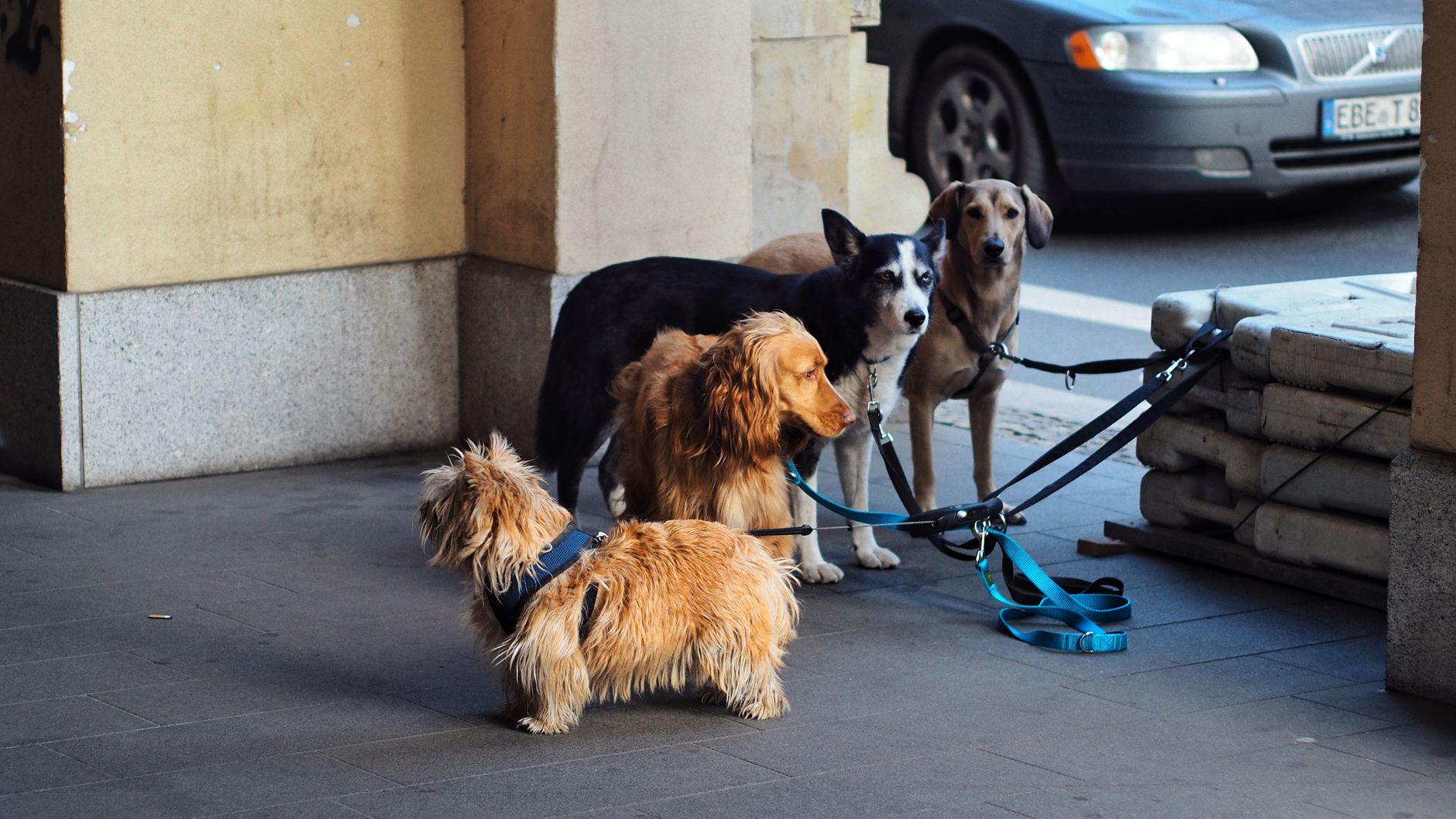
Ever feel like you’re negotiating with a furry, four-legged brick wall? I’ve been there, staring into the stubborn, soulful eyes of my Bullmastiff, Bruce, as he decided the ‘come’ command was merely a suggestion. It’s not defiance—it’s a deep-seated independence bred into specific dogs for centuries. Training a stubborn breed isn’t about breaking their will; it’s about becoming the most interesting and rewarding option in their world. In 2026, the most effective techniques blend neuroscience-backed positive reinforcement with a deep understanding of breed-specific drives, moving far beyond simple bribery. This guide is for the owner of the Siberian Husky who’d rather sing than sit, the Shar-Pei who contemplates your request for 30 seconds before walking away, and the Dachshund who believes digging a new tunnel under the fence is a better use of time than ‘stay’.
7 min read
In This Article
Key Takeaways
- Understanding the “Stubborn” Mindset
- The 2026 Training Toolkit: Beyond Treat Pouches
- Breed-Specific Protocol: The Shar-Pei vs. The Beagle
- The Critical Role of Exercise & Mental Drain
Understanding the “Stubborn” Mindset
Labeling a dog as stubborn is often a human misinterpretation of a highly functional canine trait: independent problem-solving. Breeds like the Akita, Shiba Inu, and Afghan Hound were developed to work autonomously, miles from their handler. This genetic wiring means they assess every command for its personal value and likelihood of success. A 2023 study from the University of Helsinki on canine cognition found that so-called “independent” breeds scored significantly higher in tasks requiring problem-solving without human guidance but lower in “biddability”—the desire to please. The key isn’t to fight this independence but to channel it. Your goal is to make compliance more rewarding than their own plan. For Bruce, that meant I had to prove that coming to me resulted in a thrilling game of tug (his currency), not just a boring pat and a dry biscuit.
Key Temperament Drivers in Independent Breeds
Three core scores from standardized temperament tests, like those from the American Temperament Test Society, are telling. Look for breeds with high scores in “Territoriality” and “Prey Drive” but moderate to low scores in “Social Attraction.” For example, a typical Chow Chow might show a territorial score of 85%, a prey drive of 70%, but a social attraction score of just 40%. This profile explains why they’ll guard your home fiercely and chase a squirrel with gusto but may not inherently care about earning your praise during a training session. You’re working with a partner, not a subordinate.
You’re working with a partner, not a subordinate.
The 2026 Training Toolkit: Beyond Treat Pouches
The old model of “treat for every behavior” fails with truly stubborn dogs; they get satiated or learn to perform only when the treat is visible. Modern training leverages a variable schedule of reinforcement and higher-value rewards. My toolkit for Bruce includes:
- Premack Principle (Grandma’s Law): Use a high-probability behavior (what the dog wants to do) to reinforce a low-probability one. “Want to sniff that bush? First, sit.” This puts their own desires to work.
- Mark & Move: Use a clicker or marker word (“Yes!”) the instant the correct behavior occurs, but follow it with movement—a throw of a ball, a sprint in a new direction—not just food. This builds dynamic engagement.
- Functional Rewards: For a Siberian Husky bred to pull, the reward for a loose-leash “heel” might be a 30-second command to “Go Pull!” on a harness. You’re rewarding with a sanctioned outlet for their instinct.
Breed-Specific Protocol: The Shar-Pei vs. The Beagle
A one-size-fits-all approach guarantees frustration. Contrast two famously strong-willed breeds with different motivations. The Shar-Pei, an ancient guardian, is aloof and confident. Their stubbornness manifests as a calm refusal. Training requires immense patience and quiet, firm consistency. A single 15-minute session per day is maximum; they mentally check out after that. Use high-value, smelly rewards like fish skins to cut through their disinterest. Conversely, the Beagle’s stubbornness is nose-driven distraction. Their world is olfactory, and no command competes with a ground scent. Here, training happens on a 15-foot long line in a grassy field. The protocol is “Check In”: whenever the dog voluntarily looks back at you during a sniffari, mark and reward heavily. You’re not fighting the sniffing; you’re building a habit of re-engagement. For the Beagle, a structured harness like the “Ruffwear Front Range” (approx. $60, size-specific) is non-negotiable for safety during scent-driven pursuits.
$60, size-specific) is non-negotiable for safety during scent-driven pursuits.
The Critical Role of Exercise & Mental Drain
A stubborn mind in an under-exercised body is a recipe for disobedience. You cannot ask a dog brimming with pent-up energy to make calm, compliant choices. However, the type of exercise is crucial. For a powerful, independent breed like the Alaskan Malamute, a 45-minute leash walk is barely a warm-up; it does little for their mental state. They need a job. A 2025 cost-of-ownership analysis for working breeds showed that owners who invested in structured pulling activities (e.g., weighted sleds or rigs for dryland mushing, starting around $300 for a basic rig) reported a 60% higher success rate in obedience training. Mental exercise is equally vital. A simple “find it” game with hidden treats or a 20-minute session with a puzzle feeder like the “Nina Ottosson Dog Brick” (approx. $45) can drain more energy than a mile run. Aim for a 60/40 split: 60% of their daily energy expenditure from physical work, 40% from mental challenges.
Managing Setbacks & Regression
Progress with a stubborn breed is rarely a straight line. You will hit plateaus and regressions, often around adolescence (8-18 months). When Bruce hit 14 months, he suddenly forgot his flawless “down” command. The mistake is to double down on repetitions, which only builds resistance. Instead, you must deconstruct the skill. I went back three steps: luring him into a down from a sit, then rewarding for any downward movement, then shaping the final position. This process took two weeks. Another common issue is environmental proofing. A dog that sits perfectly in your kitchen may utterly ignore you at the dog park. Build reliability using the “Three D’s” gradually: Distance (start 3 feet away, then 6, then 10), Duration (hold for 3 seconds, then 5, then 10), and Distraction (add a quiet radio, then a dropped leash, then a person walking by). Increasing any one “D” means temporarily lowering the other two.
Essential Gear for Success (2026 Edition)
The right equipment removes physical conflict and builds clear communication. For leash work with a powerful, pull-prone breed like the Bull Terrier, a standard flat collar can encourage opposition reflex. My top recommendations are:
- Harness for Control: The “Blue-9 Balance Harness” (approx. $55) is my go-to. Its unique front and back clip design allows for gentle steering without restricting shoulder movement. The chest strap sits low to avoid pressure on the trachea.
- Long Line for Freedom: A 30-foot biothane long line from “Bold Lead Designs” (approx. $40) is indispensable for practicing recalls in open spaces. Biothase doesn’t absorb water or dirt, making it easy to clean.
- High-Value Reward Kit: Ditch the kibble. Use a mix of “Stella & Chewy’s Meal Mixers” (freeze-dried patties, approx. $25/bag) and a dedicated tug toy like the “Lupine Pet Tug-a-Wub” (approx. $15) that only appears during training sessions to maintain its value.
When to Seek Professional Help
There’s a fine line between stubbornness and a deeper behavioral issue. If your dog’s refusal is accompanied by signs of anxiety (whites of eyes showing, tucked tail, lip licking), fear (growling, snapping), or outright aggression, you need a certified professional. Look for a “Certified Professional Dog Trainer – Knowledge Assessed” (CPDT-KA) or a “Board-Certified Veterinary Behaviorist” (DACVB). The latter is a veterinarian with a specialty in behavior; an initial consultation typically costs between $500-$800 and is often covered by pet insurance with behavioral riders. A pro can spot subtle triggers you might miss. I once called in a CPDT-KA when Bruce began refusing to go through a specific doorway; the trainer identified a faint buzzing from a faulty light switch that was causing him anxiety—a issue I, in my frustration, had completely overlooked.
Training a stubborn dog breed is a marathon of patience, creativity, and consistency. It requires you to become a keen student of your dog’s individual motivations, which are often buried under centuries of selective breeding. The three actionable takeaways for 2026 are: first, identify your dog’s primary currency (food, play, freedom, instinctual work) and use it strategically. Second, invest in the specific gear that facilitates clear, force-free communication. Third, prioritize draining both mental and physical energy every single day; a tired dog is a trainable dog. The victory with a stubborn breed isn’t just a reliable ‘stay’—it’s the moment of willing partnership, when your independent thinker chooses to work with you, proving that the strongest bonds are built through mutual respect, not mere compliance.
Sources & further reading
- How (TV series) (en.wikipedia.org)
FAQ
What’s the most common mistake owners make when training a stubborn dog? The biggest error is repeating a command louder or more frequently. To a dog like a Basset Hound, this just becomes background noise. It teaches them they don’t need to listen on the first, or even the fifth, request. Instead, say the command once clearly. If there’s no response within 3-5 seconds, calmly use a lure (like a treat in your hand) to guide them into the position without repeating the verbal cue. This preserves the meaning and value of the command word itself.
Are some breeds too stubborn for first-time dog owners? Absolutely. While any dedicated person can learn, breeds like the Akita, Chow Chow, and Tibetan Mastiff present significant challenges due to their powerful independence, strong guarding instincts, and potential for same-sex aggression. They require an owner who can project calm, unwavering leadership without resorting to intimidation. A first-time owner would generally have a more rewarding experience with a breed that has higher social attraction scores, such as a Labrador Retriever or a Golden Retriever, where the desire to please is a built-in training advantage.
How long does it take to see real progress with a stubborn adult dog? Temper your expectations. With a consistent, modern positive reinforcement protocol, you should see noticeable engagement and willingness within 2-3 weeks. However, reliable obedience in low-distraction environments may take 3-4 months of daily short sessions (10-15 minutes). Proofing those behaviors around major distractions (other dogs, squirrels, the park) is a lifelong process of maintenance. For my Bullmastiff, achieving a 90% reliable recall in our backyard took about 6 weeks; getting that same reliability at a quiet field took over 8 months of dedicated practice.
Small changes, real momentum
Get practical guides and templates you’ll actually use — a few thoughtful emails a month.
🐾 Our Top Pick
Editor’s Pick: An interactive dog feeder for smarter meal-based training.
For the Love of Your Pet
Care guides, breed insights, and gentle advice for happier pets.